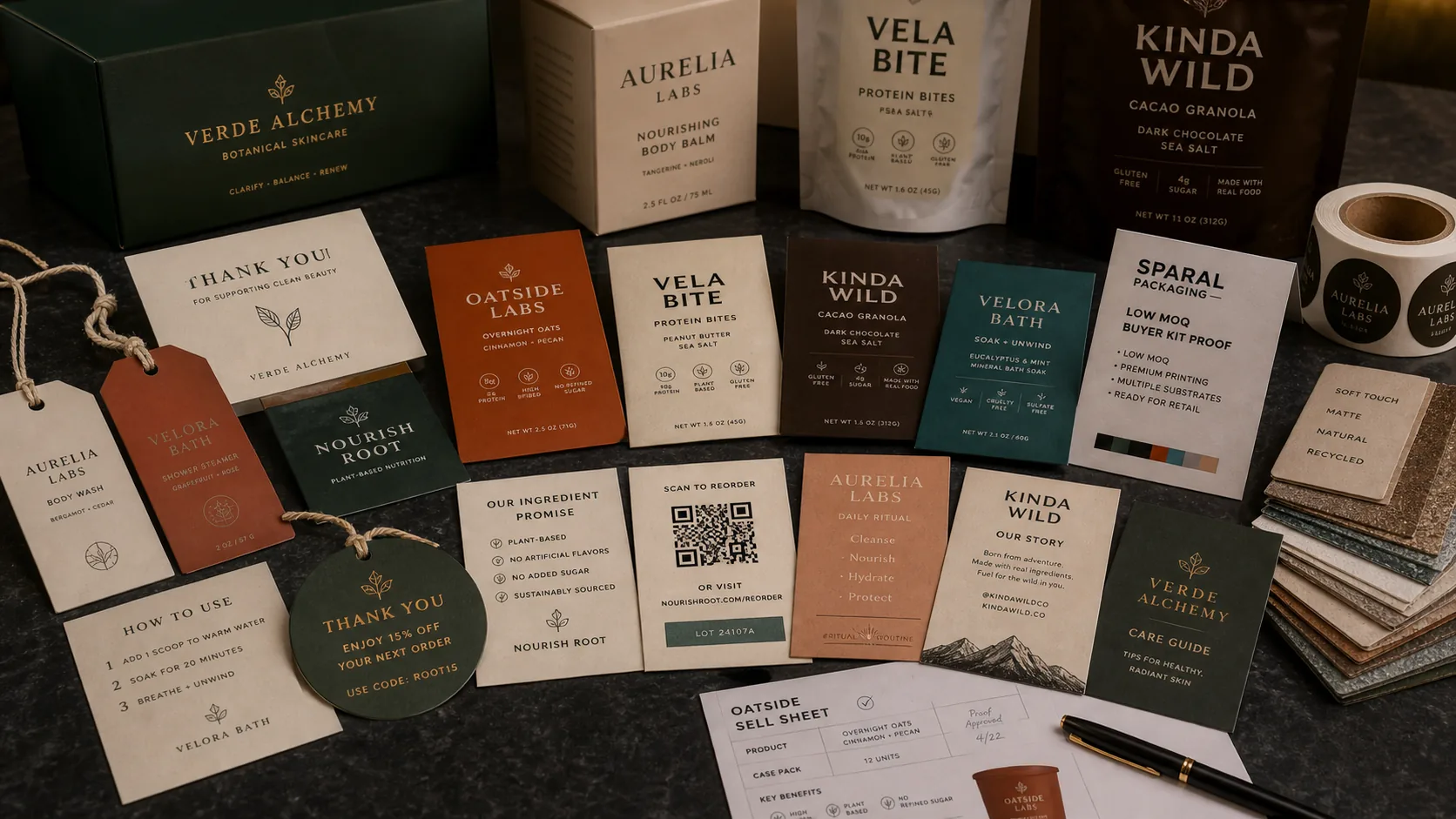
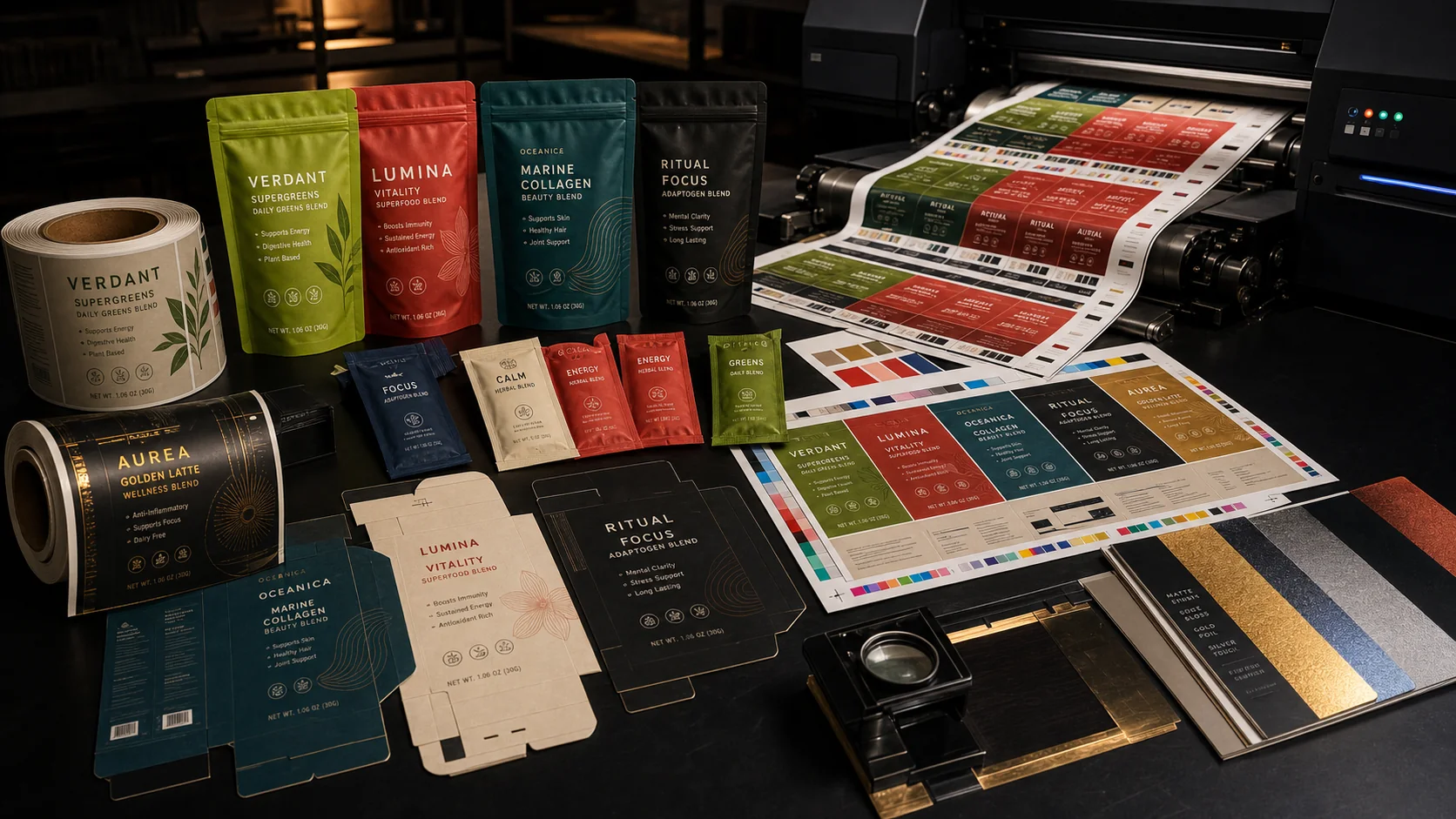
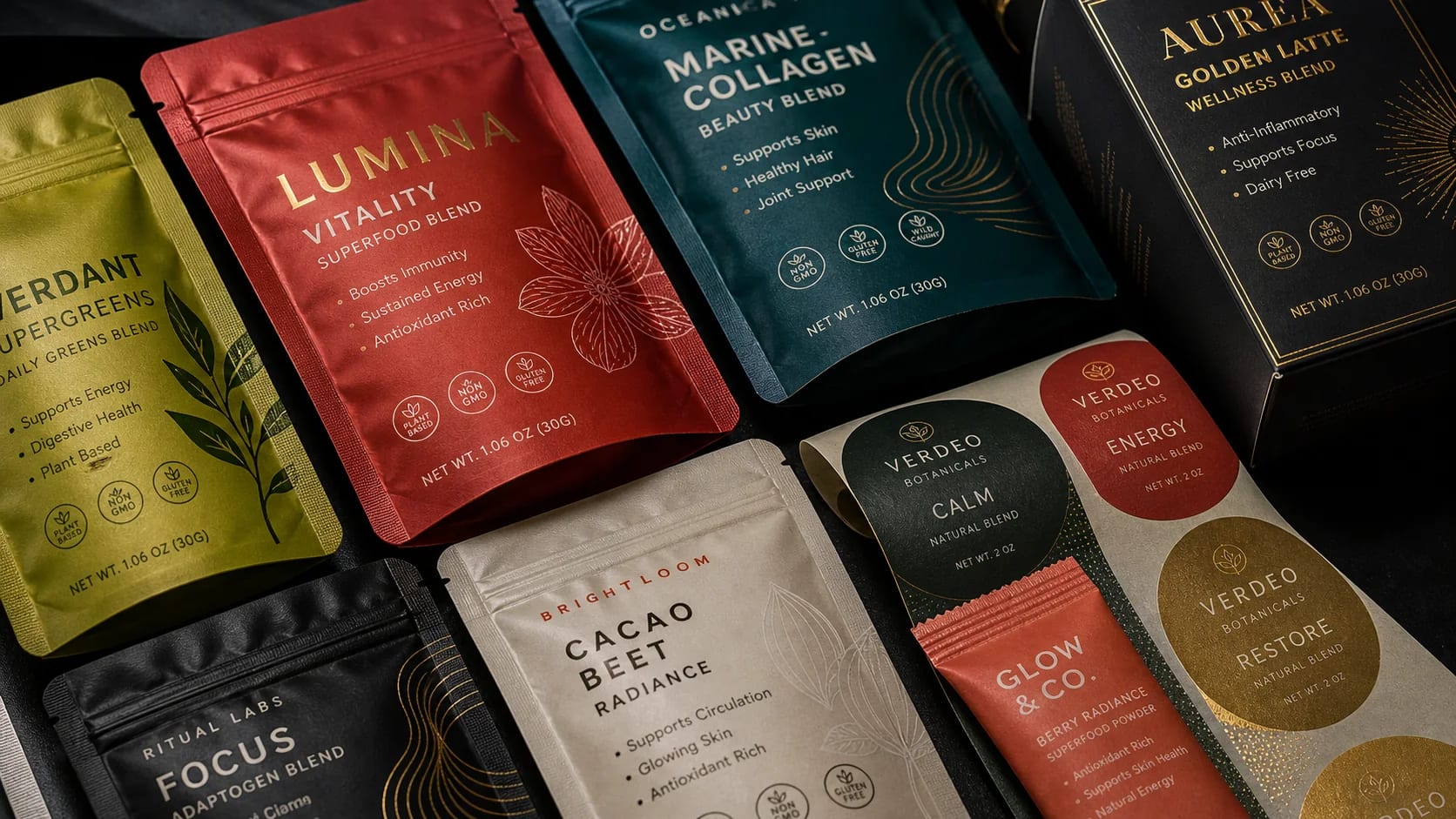
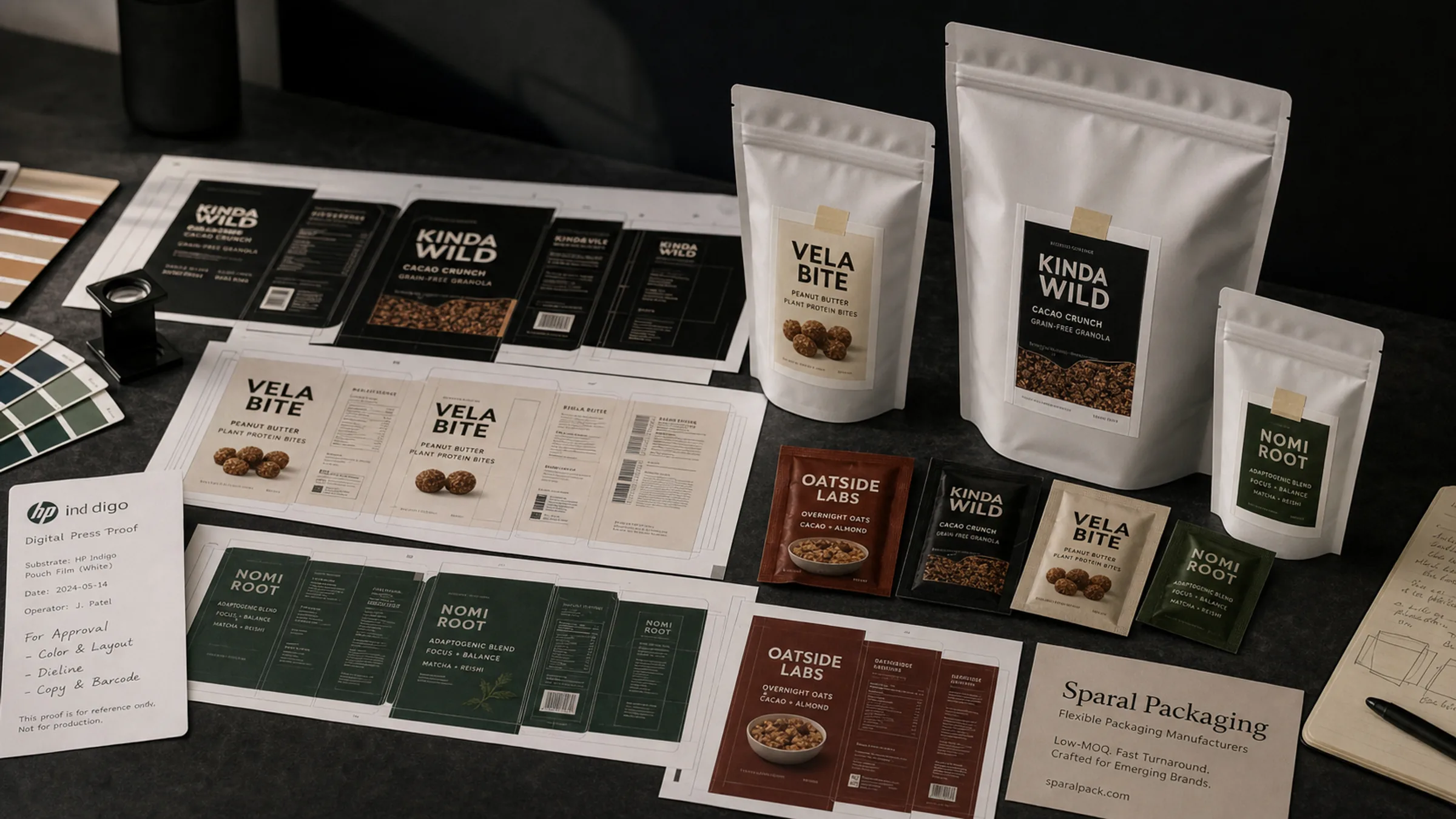
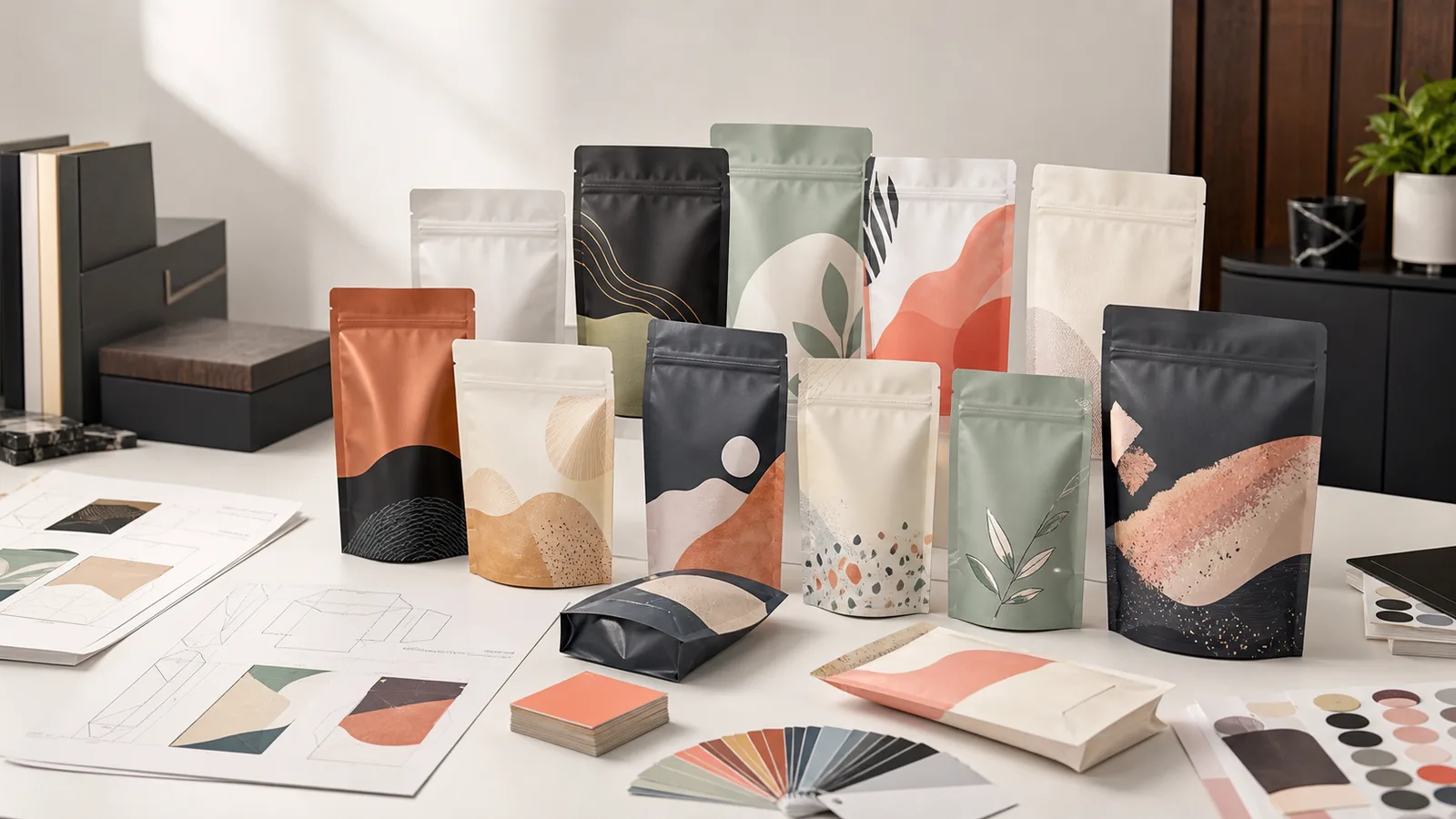
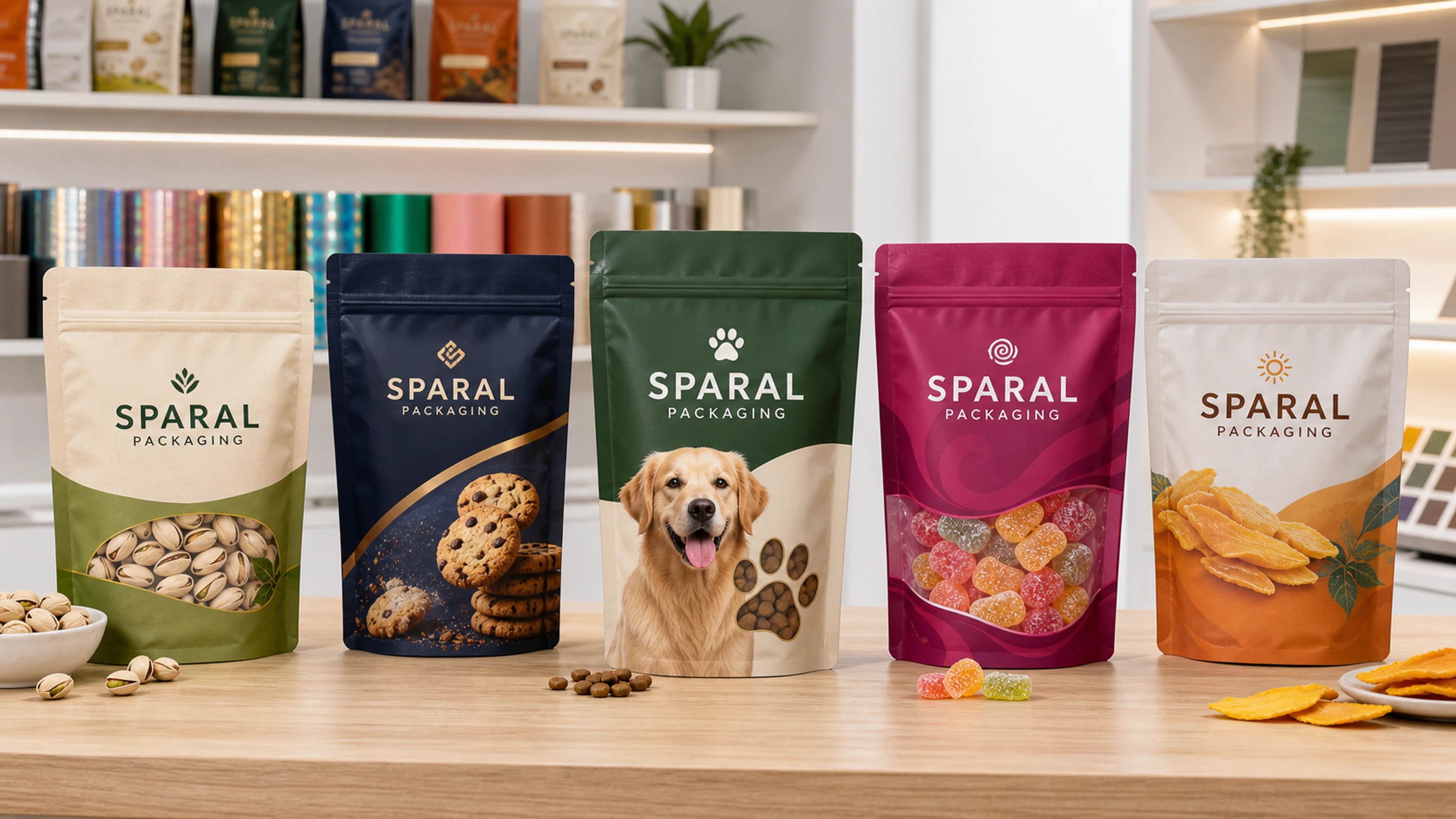
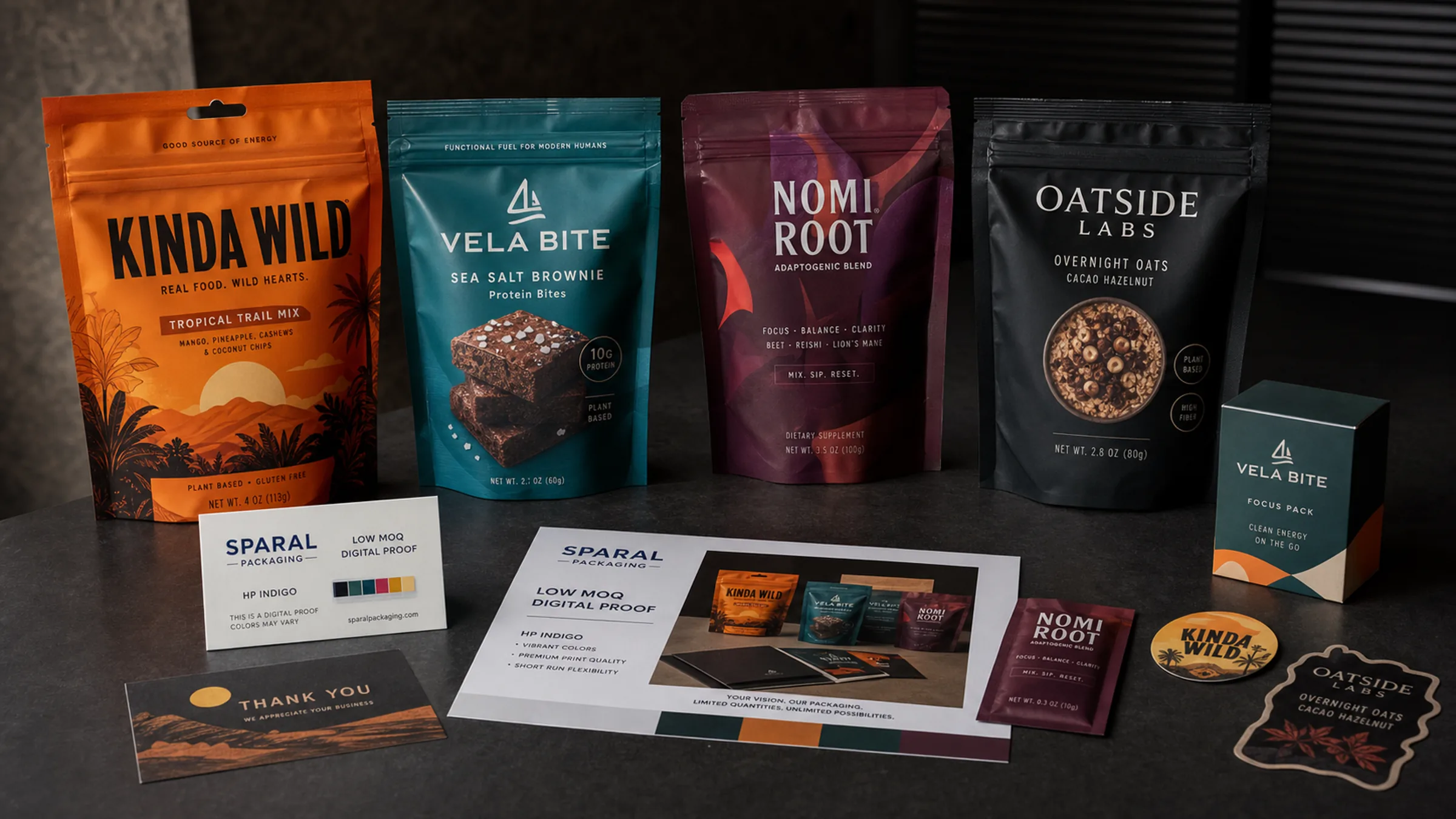
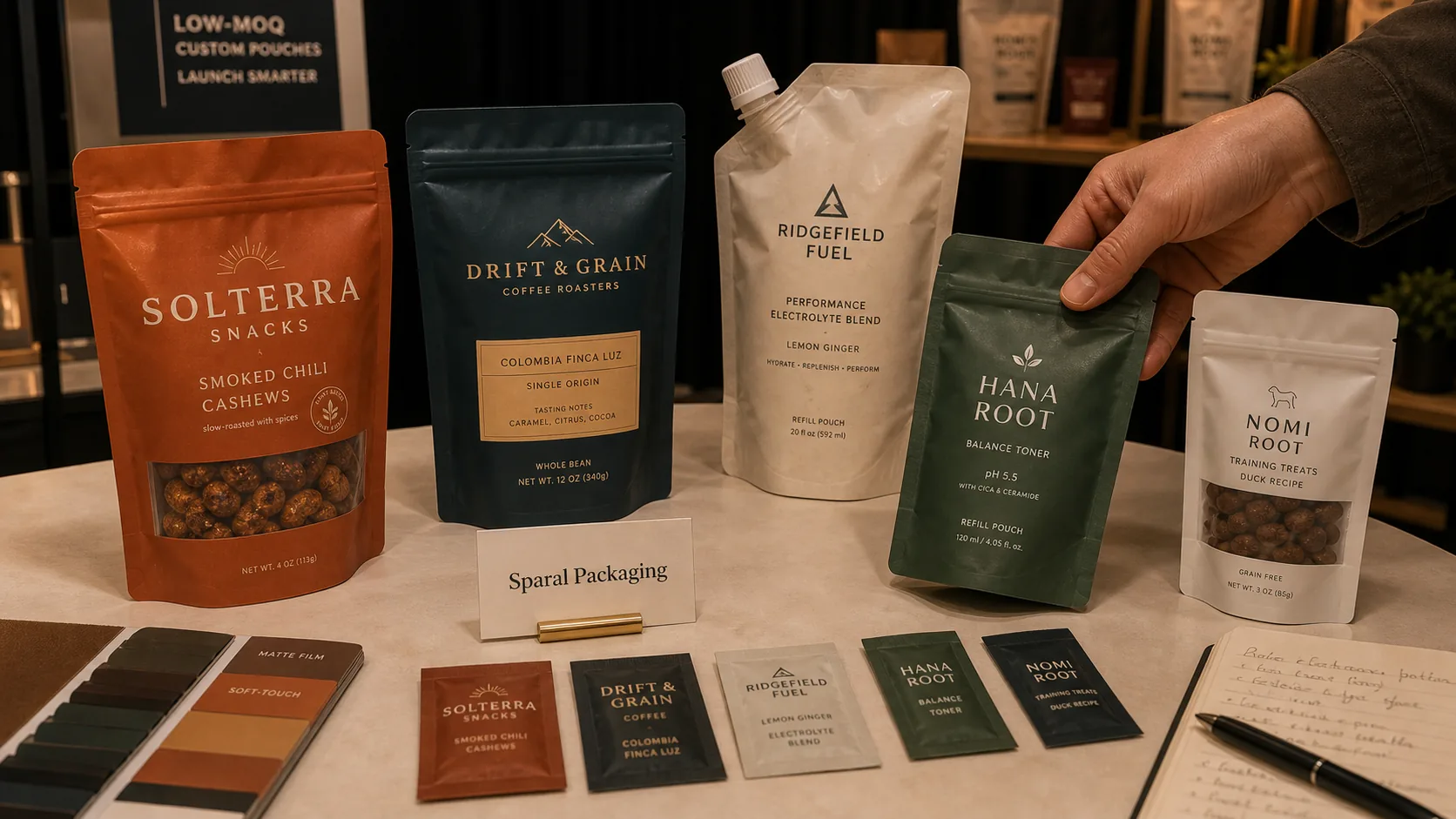
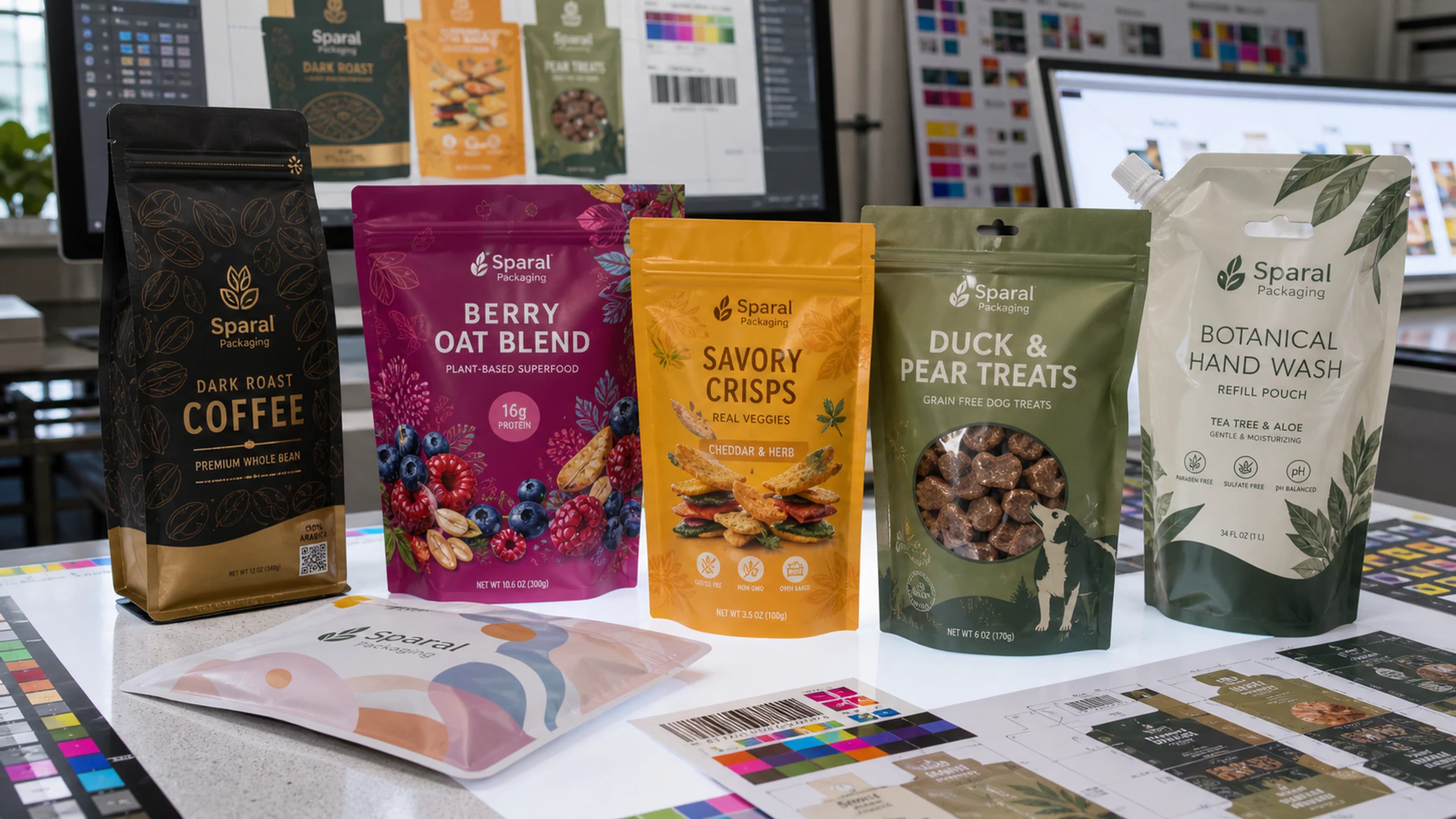
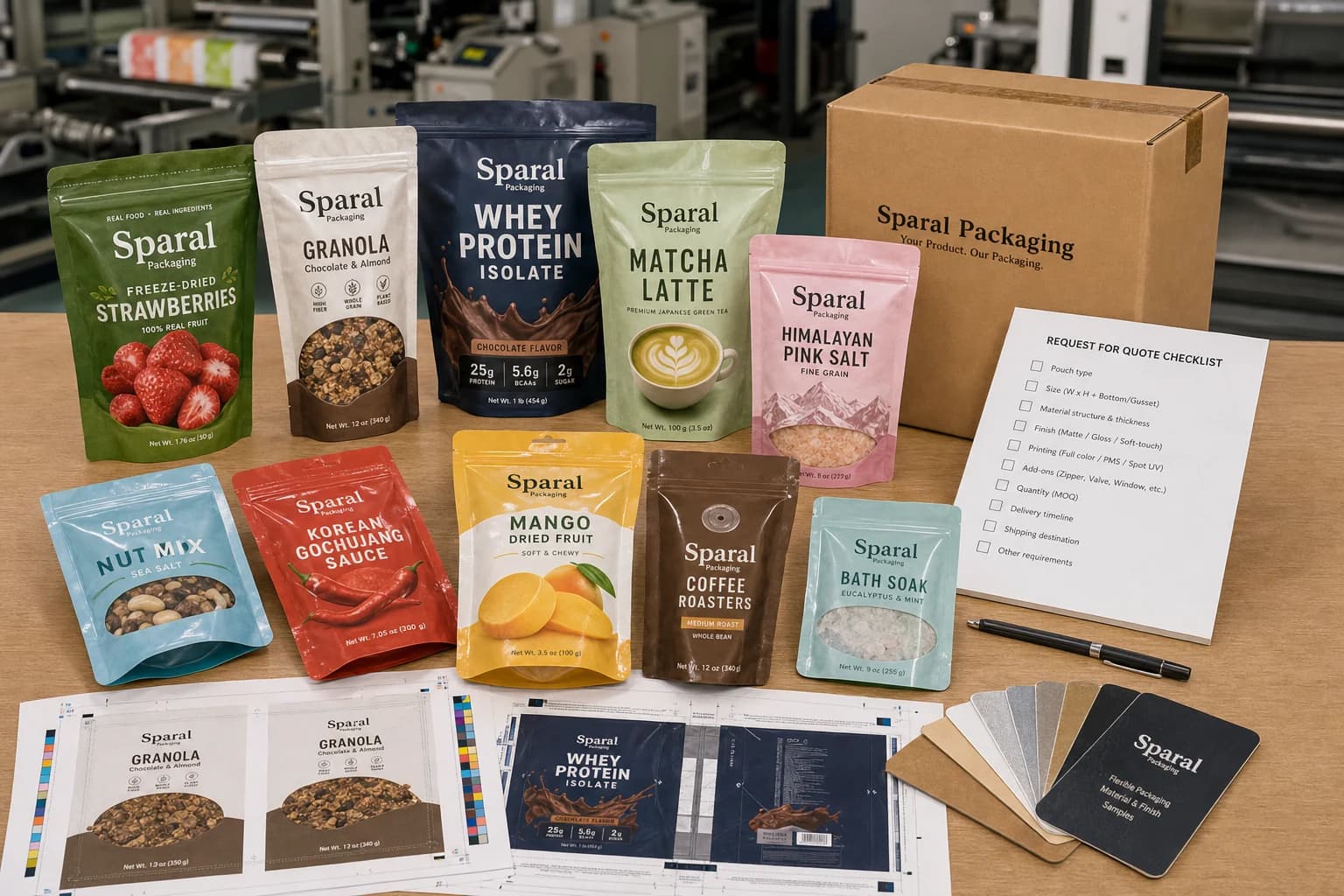
Make the first pouch run look like it already belongs on shelf.
Low MOQ pouches cannot feel like a compromise. The front panel, finish, zipper, gusset, and SKU family need to signal retail confidence before the market has proven demand.
Low MOQ custom pouches
Plan low MOQ custom printed pouches with HP Indigo digital print logic, full-print artwork, retail-ready materials, and a path from first run to reorder volume.
100+
pouches per SKU by project
HP Indigo
digital print path
6 lanes
pouches, labels, boxes, cards
Reorder
scale only proven SKUs
Low MOQ pouch film
This section turns low MOQ pouches into a visual buying argument: retail presence first, proof risk second, and market learning third.
Build pouch briefProof-to-shelf comparison
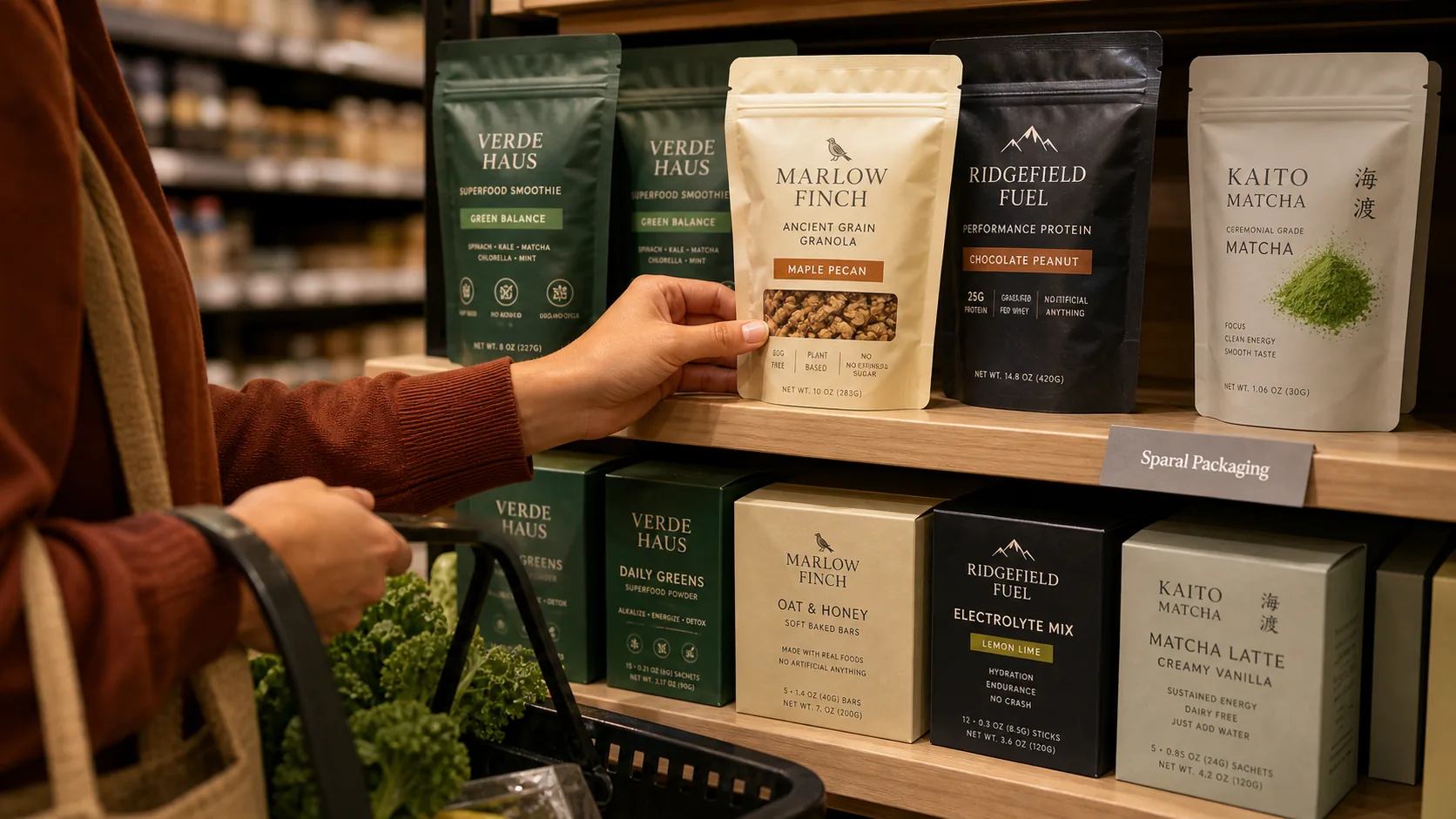
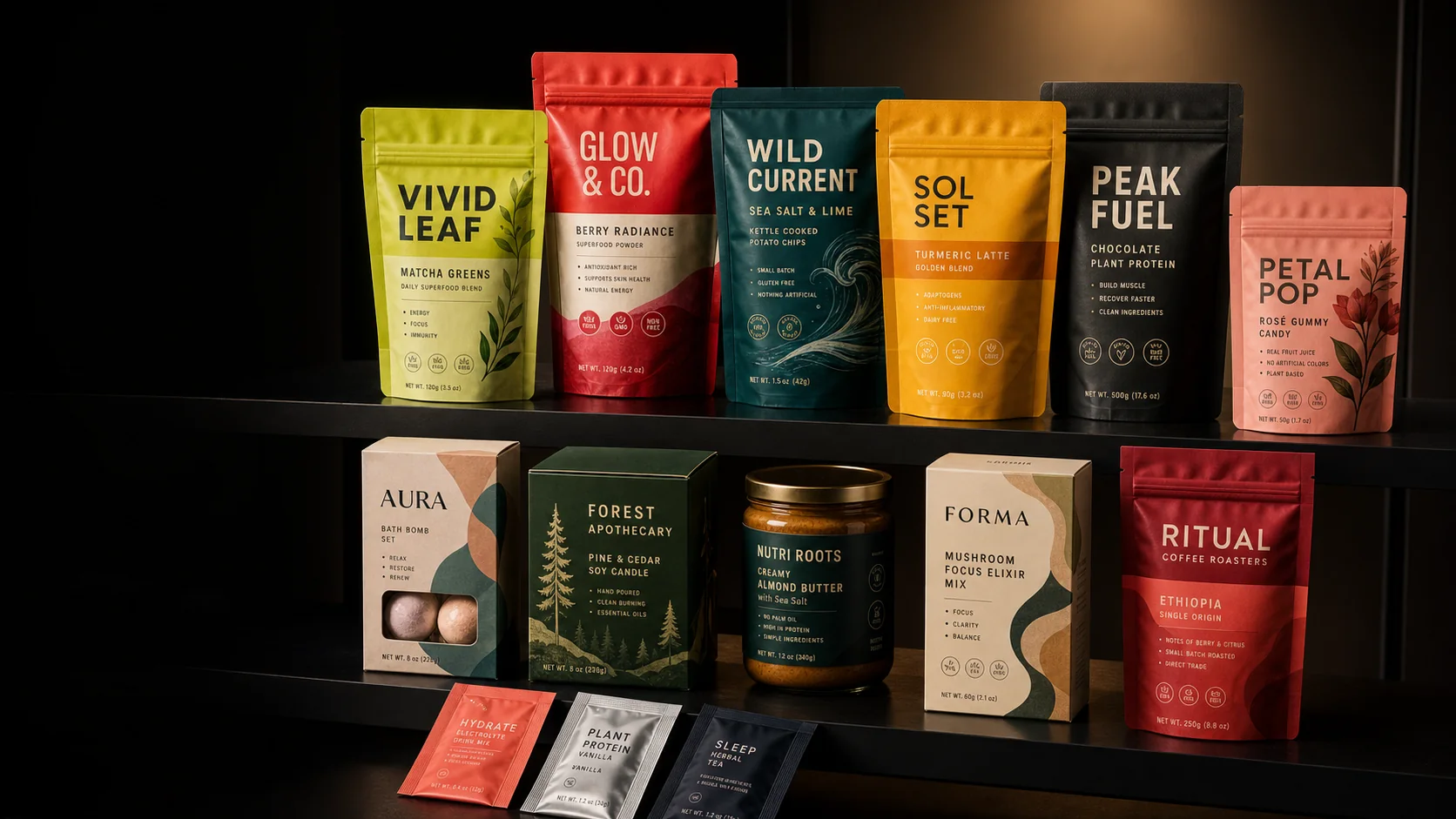
A founder should feel the gap between unfinished artwork risk and a real retail pouch family. Low MOQ becomes safer when that gap is visible before the quote.
Pouch structure
Color and finish proof
SKU hierarchy
Second-run signal


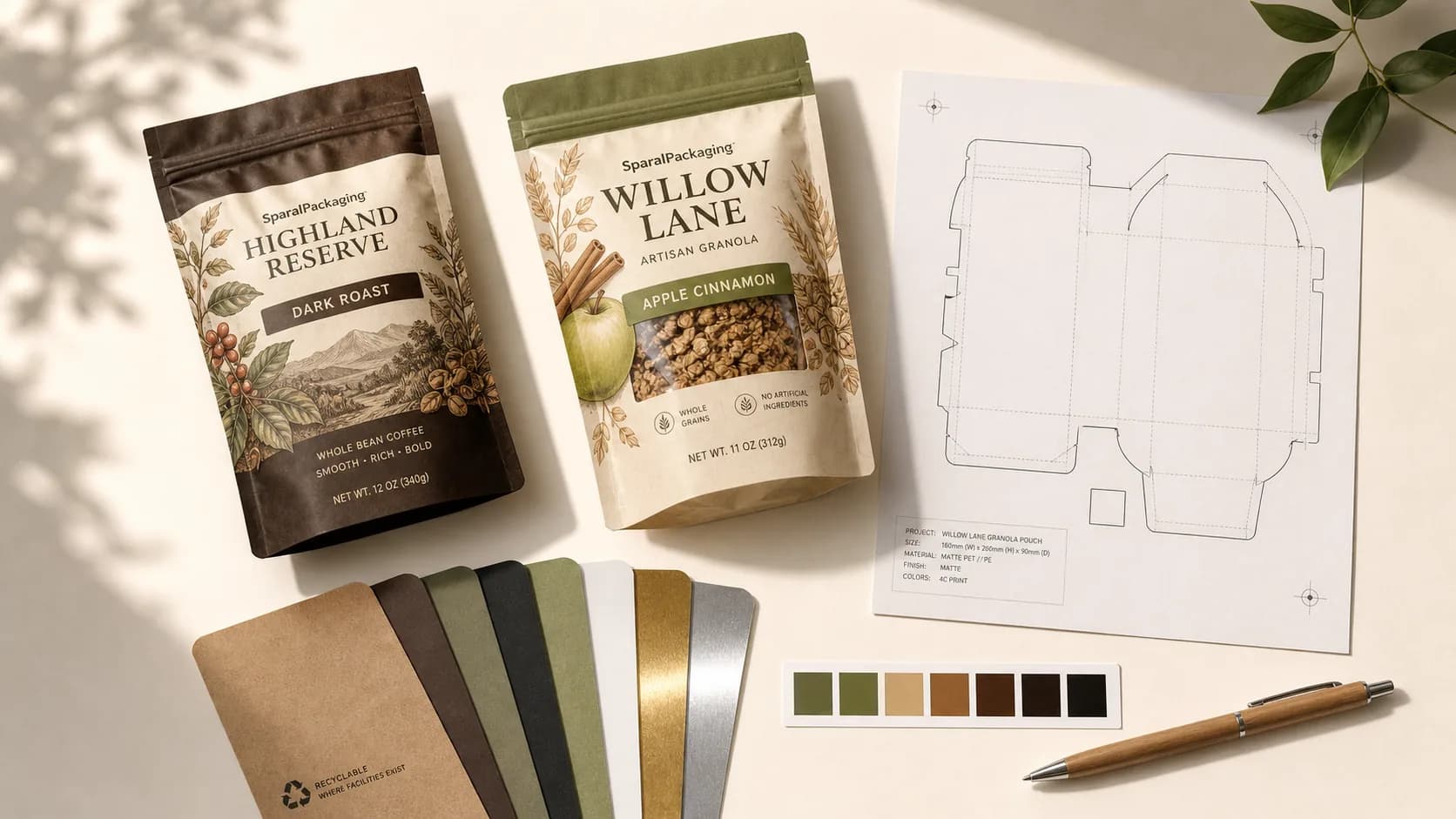
Custom pouch proof
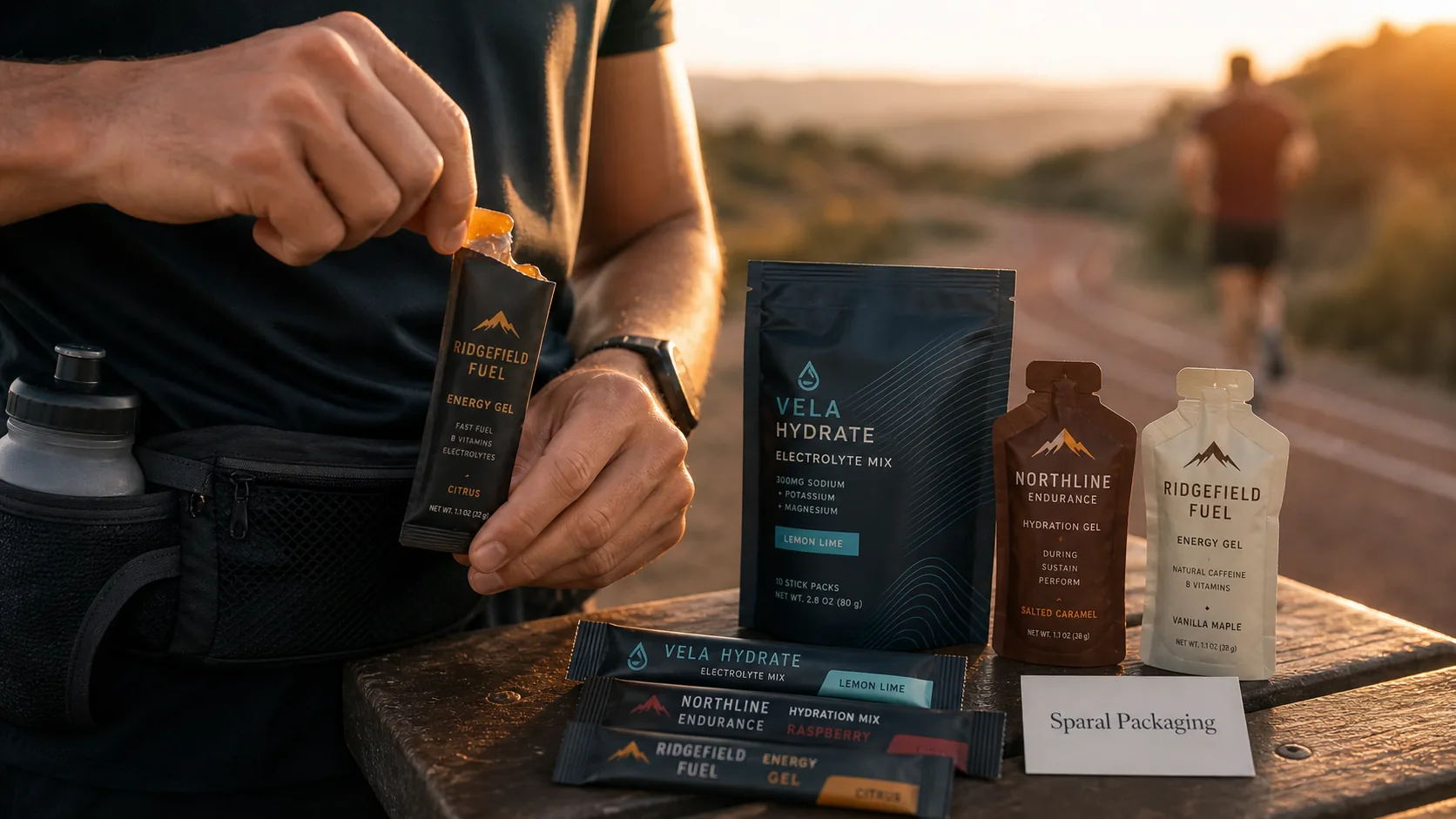
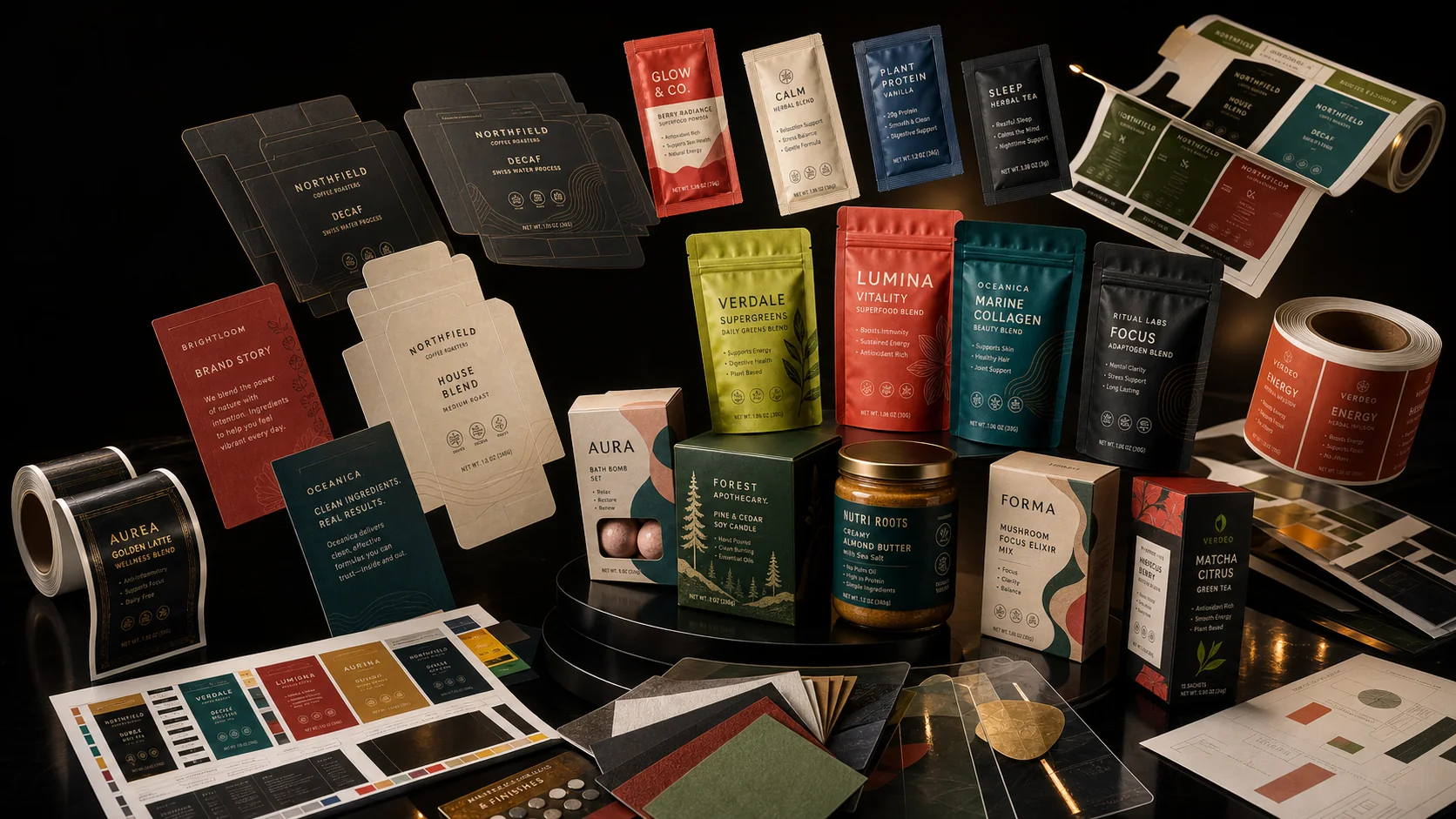
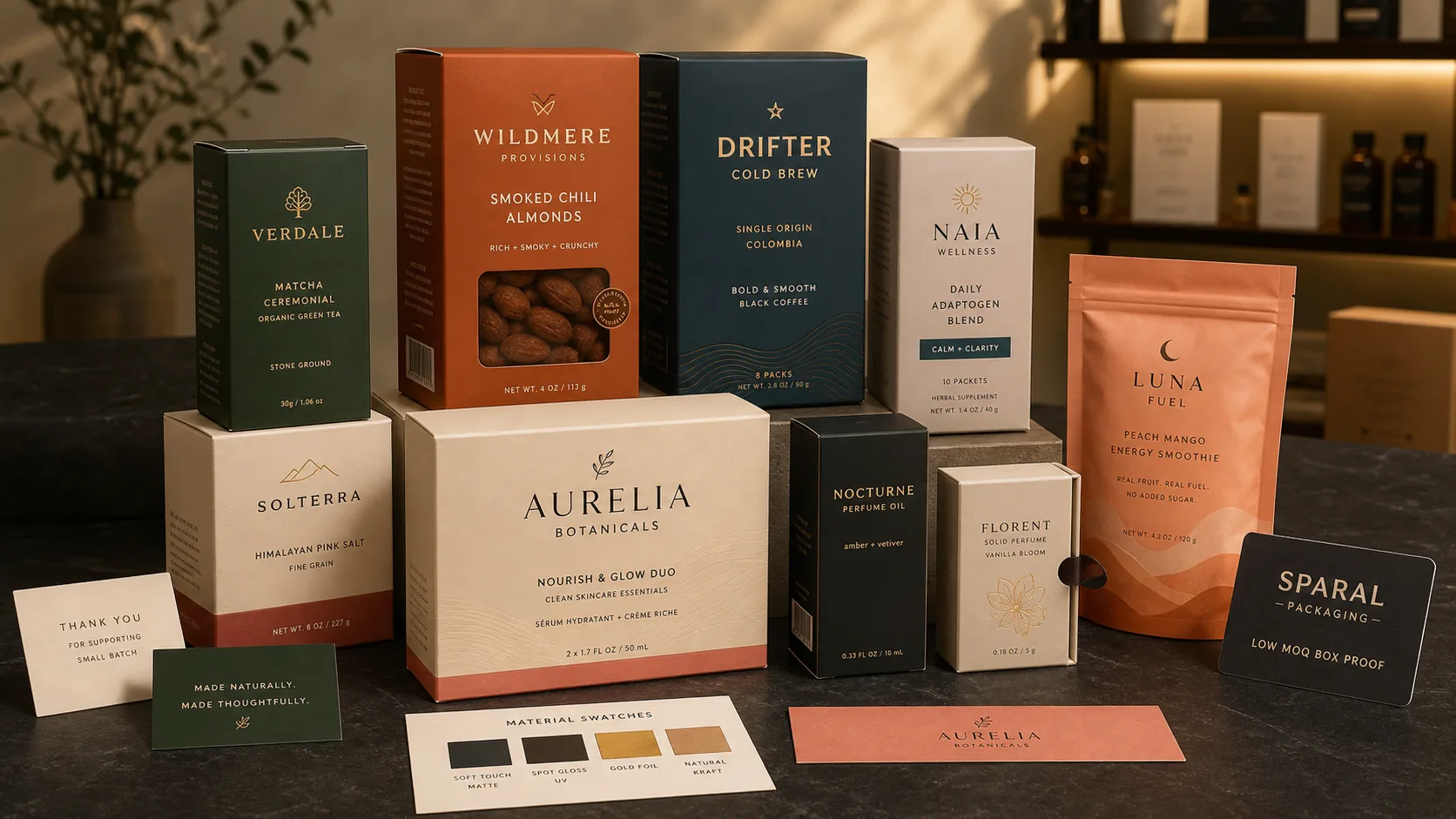
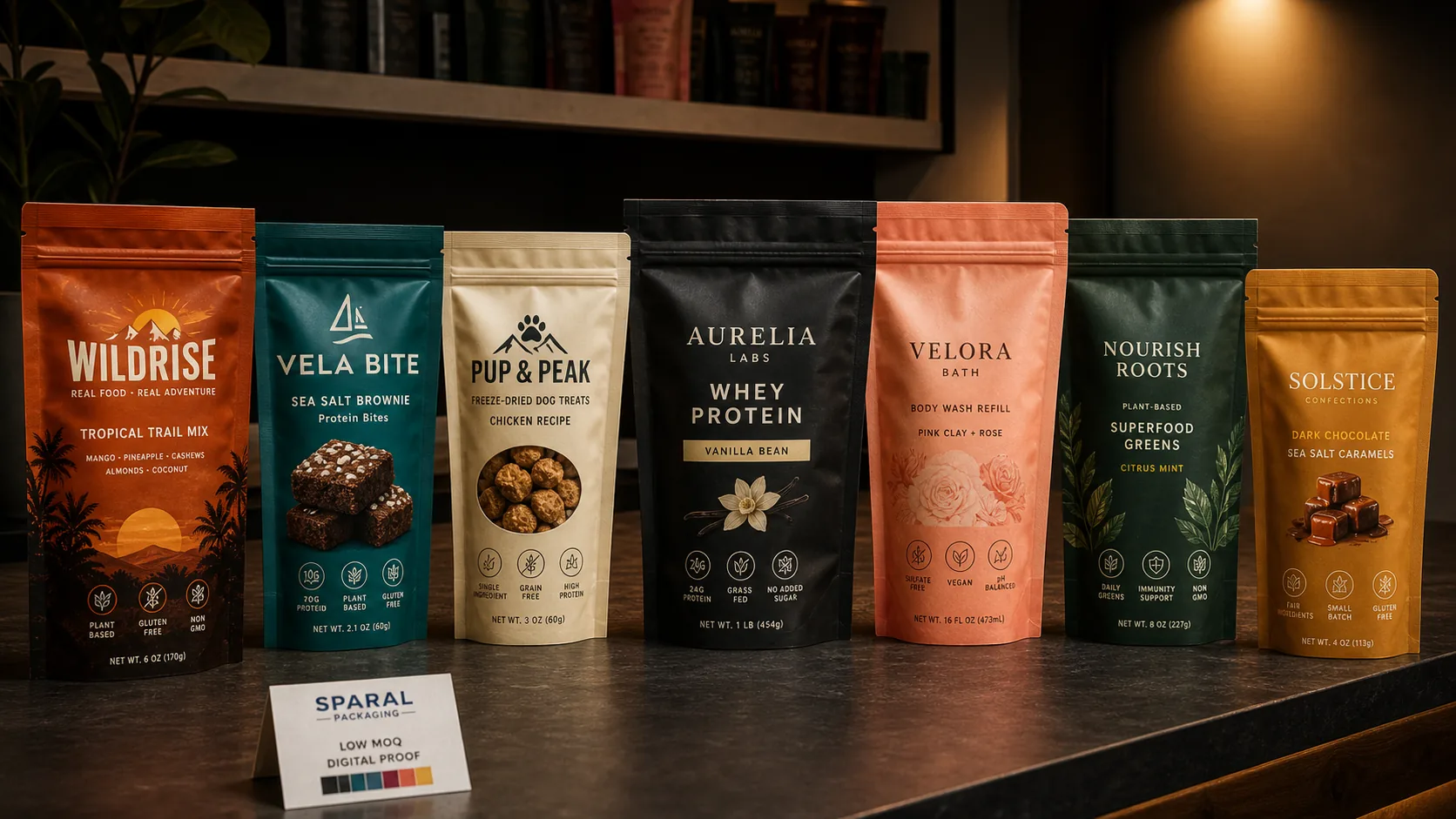
The broader search market wants custom pouches; the conversion question is whether a first run can look real without 100k or 200k pcs. These scenes show shelf, sample, sports, and proof moments that make that answer visible.
Low MOQ submenu / Pouches
Low MOQ pouches convert better when the visitor sees the finished shelf state first, then understands how hero SKUs, test SKUs, buyer samples, and reorders fit one run.

Primary role
Pouch-led demand test
Best proof
Retail-ready printed family
Next quote input
SKU count and quantity by SKU
Current page role
This page belongs in the Low MOQ menu because it helps a small first run look credible, testable, and ready for a cleaner second order.

Soft-pack core
Use full-print pouch runs to prove shelf impact, SKU demand, sample response, and reorder confidence.

Full launch system
Coordinate pouches, boxes, labels, cards, inserts, and samples inside one first-run packaging brief.

Retail structure
Use cartons, mailers, sleeves, and kit boxes when the launch needs structure or presentation.

SKU control
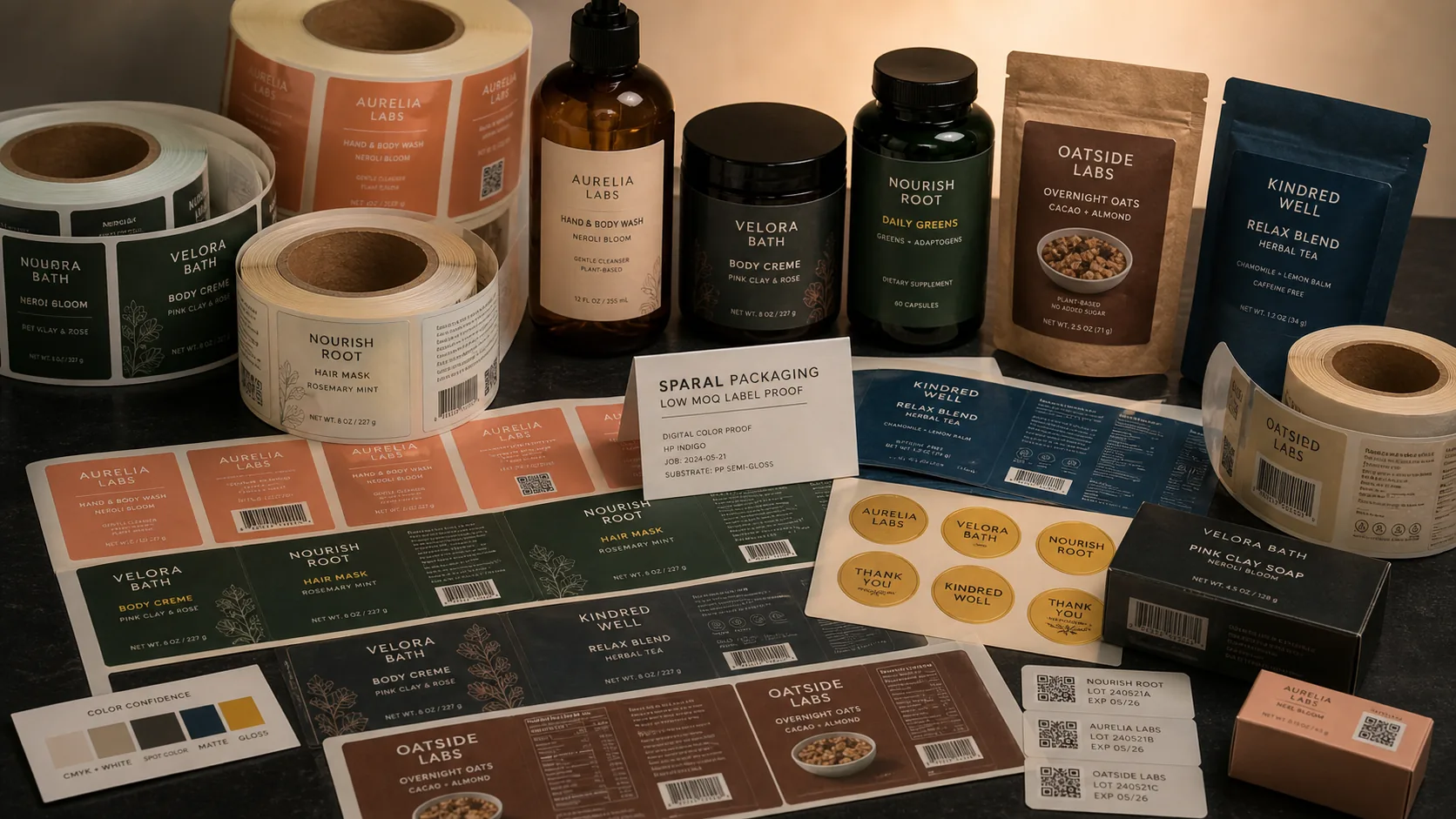
Use labels to version bottles, jars, boxes, pouches, QR panels, compliance fields, and seasonal tests.
Interactive 3D
Spin a real stand up pouch model — the same dieline your artwork prints on. Matte, gloss, foil, kraft, and window directions render live, so you can judge shelf presence before you ever request a proof.
Custom packaging
Tell us what you are packing, the packaging style you want, and how many versions you need. Sparal can help match low moq pouches with the right material, finish, proof plan, and order quantity.
Use cases
Why brands choose it
Low MOQ pouch quote path
Use this page when a brand needs low MOQ stand-up, flat-bottom, spout, window, refill, sample, or sachet pouches that can test the market before volume purchasing.
MOQ
100+ pouches per SKU by project; first-run quantities are reviewed around pouch size, SKU confidence, material, and proof readiness.
Specs
Send product category, pouch format, pouch size, SKU count, quantity per SKU, material needs, finish, artwork status, and launch date.
Material
Pouch films should follow product risk, channel, shelf-life needs, proof needs, and the role each SKU plays in the first run.
Lead time
Clean digital artwork can move quickly to proof; low-MOQ pouch work gets faster when the SKU map, pouch format, and approval owner are fixed before quote review.

Pouch proof path
Low MOQ pouch launches work when the hero SKU, test variants, pouch structure, and reorder trigger are planned before production.
Best-fit products
Quote inputs
Pouch launch stack
Map the hero SKU, test variants, proof assets, buyer samples, and reorder trigger before the first pouch run becomes inventory.
Build the launch stack
Layer 01
01The first visual signal is still the pouch family: hero SKU, test variants, finish direction, and shelf shape.

Layer 02
02Boxes, labels, cards, and sample-kit parts join only when they help the buyer understand the run faster.

Layer 03
03Digital print turns versioning into a controlled launch workflow instead of a plate-heavy inventory bet.

Layer 04
04The first run should leave a clear reorder path: which SKU worked, which component helped, and what to simplify next.
Low MOQ learning path
Most customers hear MOQ and think only about quantity. This section reframes it as a launch-risk system: buy enough to look real, learn from the market, then scale the SKUs that earn demand.
Unknown demand
Most first launches do not know which SKU, channel, flavor, scent, or claim will earn repeat demand. Low MOQ keeps that uncertainty visible instead of burying it in inventory.
Risk: dead stock
SKU map
Give likely winners more units and keep experimental variants lean. The quote becomes a launch portfolio, not one flat quantity across every pouch.
Hero / test / sample
Retail proof
The customer and buyer judge the package before they care that it was low MOQ. Finish, material, zipper, window, and artwork hierarchy still need to feel production-ready.
Premium at test volume
Buyer sample
Low MOQ pouches are strongest when they create samples for retail buyers, DTC ads, trade shows, photos, and real customer feedback before the second order.
Learn before scale
Reorder path
Once the winning SKU is visible, Sparal can help review the next print path, larger quantities, or a digital-to-volume transition without guessing upfront.
Second order logic
Low MOQ starter rail
A first run can hold a hero pouch, lean variant tests, and buyer samples in one quote. The rail makes the commercial reason for low MOQ visible before the form asks for quantities.
Starter SKU
Start with the SKU most likely to carry the brand story, then keep the first order lean enough to learn from real buyers.
Variant tests
Small variant runs help founders compare demand instead of forcing every idea into the same inventory commitment.
Sample loop
Retail samples, DTC photos, and trade-show packs become evidence for the next order, not leftovers from a bulk bet.
Reorder trigger
When sell-through, buyer feedback, or repeat orders point to a winner, the next quote can shift toward a cleaner volume path.
Low MOQ concept visual
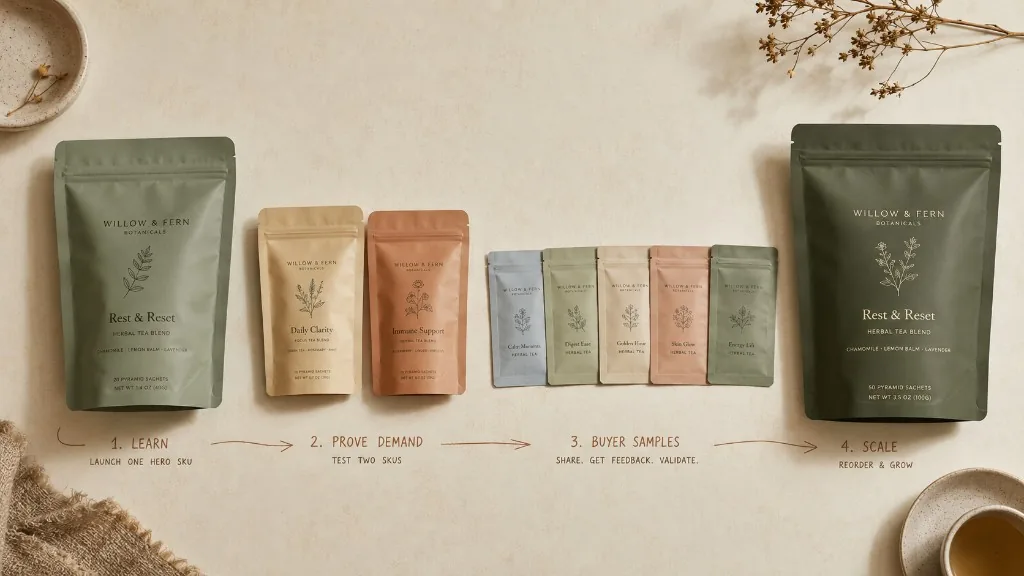
This visual turns the low-MOQ decision into a simple sequence: one credible hero SKU, small learning SKUs, buyer samples, then a reorder path once the market shows what to scale.
Learn
Start with a real-looking hero pouch and lean test SKUs so demand signals stay visible.
Prove demand
Use retail-grade samples for buyer feedback, DTC photos, and channel conversations before committing volume.
Scale
Move the second run toward the SKUs and formats that earned reorder confidence.

Spout and refill proof kit
Show viscosity, cap fitment, seal path, refill directions, and channel risk before the pouch is quoted. The cards call out the visible zones, material logic, quote checks, and next-step links Sparal reviews before proof, so the visual is useful to buyers and readable to search agents.

01
Front label hierarchy
Low MOQ custom pouches help brands test flavors, channels, claims, and pouch formats before committing to warehouse-scale inventory. Sparal keeps the first run pouch-led: stand-up, flat-bottom, spout, window, high-barrier, sample, and refill structures that can look retail-ready before demand is proven.
02
Format and structure
Sparal checks whether the structure fits low moq pouches, stand-up pouches, flat-bottom pouches before artwork proofing.
03
Material and finish callout
Reduce dead inventory before product-market fit.
04
Back panel, barcode, lot/date
Back-panel and variable-data zones are fixed before proof so quote review, artwork approval, and reorder files stay aligned.

Material decision visual
Format read
100+ pouches per SKU by project
Material read
Stand-up, flat-bottom, spout, clear-window, high-barrier, sample, refill, and sachet pouches
Quote readiness module
Send
Avoid
Label and production zones
Front label hierarchy
Low MOQ custom pouches help brands test flavors, channels, claims, and pouch formats before committing to warehouse-scale inventory. Sparal keeps the first run pouch-led: stand-up, flat-bottom, spout, window, high-barrier, sample, and refill structures that can look retail-ready before demand is proven.
Format and structure
Sparal checks whether the structure fits low moq pouches, stand-up pouches, flat-bottom pouches before artwork proofing.
Material and finish callout
Reduce dead inventory before product-market fit.
Back panel, barcode, lot/date
Back-panel and variable-data zones are fixed before proof so quote review, artwork approval, and reorder files stay aligned.
SKU family proof kit
SKU 01
Hero refill
Main size, refill target, and cap color.
SKU 02
Formula variant
Viscosity, scent, and ingredient-panel changes.
SKU 03
Leak test sample
Cap, seal, drop, and freight assumptions.
SKU 04
Retail or DTC pack
Channel-specific copy, barcode, and secondary pack.
Low-MOQ launch proof
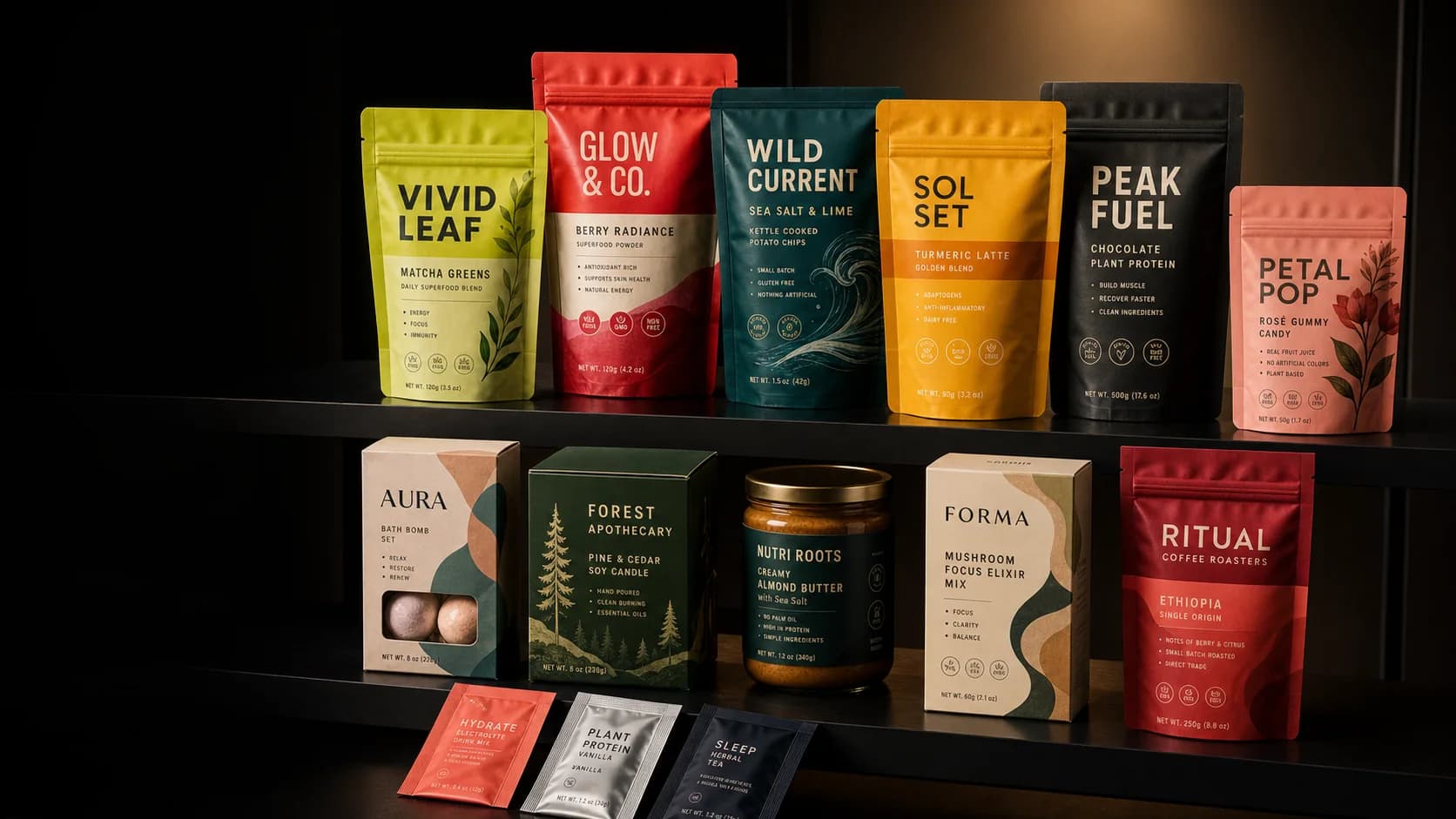
Show founders and buyers what a controlled pouch launch can look like before the brand commits to warehouse-scale inventory.

Best for
Market tests, buyer samples, seasonal flavors, and first paid drops.
Quote signal
SKU count, quantity per SKU, size, material, finish, and target launch date.
Commercial win
Reduce dead stock while keeping full-print shelf quality.
Proof path
3-5 day digital proof target when artwork inputs are clean.

Launch kit
Multiple colors, finishes, and sizes can launch as one brand system instead of separate print jobs.
SKU count
4-24 launch SKUs
Format
100+ pouches per SKU by project
Finish
Stand-up, flat-bottom, spout, clear-window, high-barrier, sample, refill,...
Risk solved
Reduce dead inventory before product-market fit.
What we learned
SKU count, quantity per SKU, size, material, finish, and target launch date.

Cost control
Hero SKUs can take more volume while experimental SKUs stay lean until demand is proven.
SKU count
4-24 launch SKUs
Format
100+ pouches per SKU by project
Finish
Stand-up, flat-bottom, spout, clear-window, high-barrier, sample, refill,...
Risk solved
Launch more variants with a controlled first run.
What we learned
SKU count, quantity per SKU, size, material, finish, and target launch date.

Proofing
A cleaner SKU map, finish note, and proof owner turns low MOQ speed into fewer revision loops.
SKU count
4-24 launch SKUs
Format
100+ pouches per SKU by project
Finish
Stand-up, flat-bottom, spout, clear-window, high-barrier, sample, refill,...
Risk solved
Keep shelf impact high even at test volume.
What we learned
SKU count, quantity per SKU, size, material, finish, and target launch date.
Ordering path
Follow the next decisions in order: market, format, material, planning tool, risk check, and pricing request.
Quote details
Brands testing demand, flavors, pouch structures, or SKU families before scale
01 / Market
DTC product tests, Retail buyer samples
02 / Format
100+ pouches per SKU by project
03 / Material
Stand-up, flat-bottom, spout, clear-window, high-barrier, sample, refill, and sachet pouches
04 / Tool
Low MOQ packaging
05 / Quote
Reduce dead inventory before product-market fit.
Send these details when you are ready for pricing, samples, or production guidance.
Get pricingPackaging signals
Use these notes to turn material, MOQ, artwork, and launch timing into a clearer quote.
01 / Market signal
The research notes connect digital flexible packaging with short runs, no plate setup, on-demand production, and service models for emerging brands. That makes low MOQ a launch-risk strategy, not just a small order size.
02 / Inventory
Digital production planning points to more versions, shorter cycles, and fast market response. A first run should give every SKU enough market signal without forcing warehouse-scale inventory before demand is proven.
03 / Buyer brief
Low MOQ works best when SKU count, pack types, artwork status, material needs, finish, quantity, and launch timing are clear. Digital flexibility does not replace a disciplined brief; it rewards one.
04 / HP Indigo path
The HP Indigo path is strongest when versioned artwork and pouch families are treated as a controlled first run. The buyer gets more ways to test flavors, formats, and claims without turning every pouch SKU into a bulk commitment.
Launch playbook
Use this section to choose format, material, artwork, quantity, and proof details before you ask for pricing.
01
Use this path when the launch still has open questions around dtc product tests and retail buyer samples.
02
100+ pouches per SKU by project. Keep the first production decision tied to learning speed, not vanity volume.
03
Reduce dead inventory before product-market fit.
Risk model
01
Reduce dead inventory before product-market fit.
02
The need for clear SKU maps, approved artwork, and material choices matched to real product risk.
03
Starting point: 100+ pouches per SKU by project / Pouch scope: Stand-up, flat-bottom, spout, clear-window, high-barrier, sample, refill, and sachet pouches / Print path: HP Indigo digital print planning for versioned, plate-free first runs
Made in-house
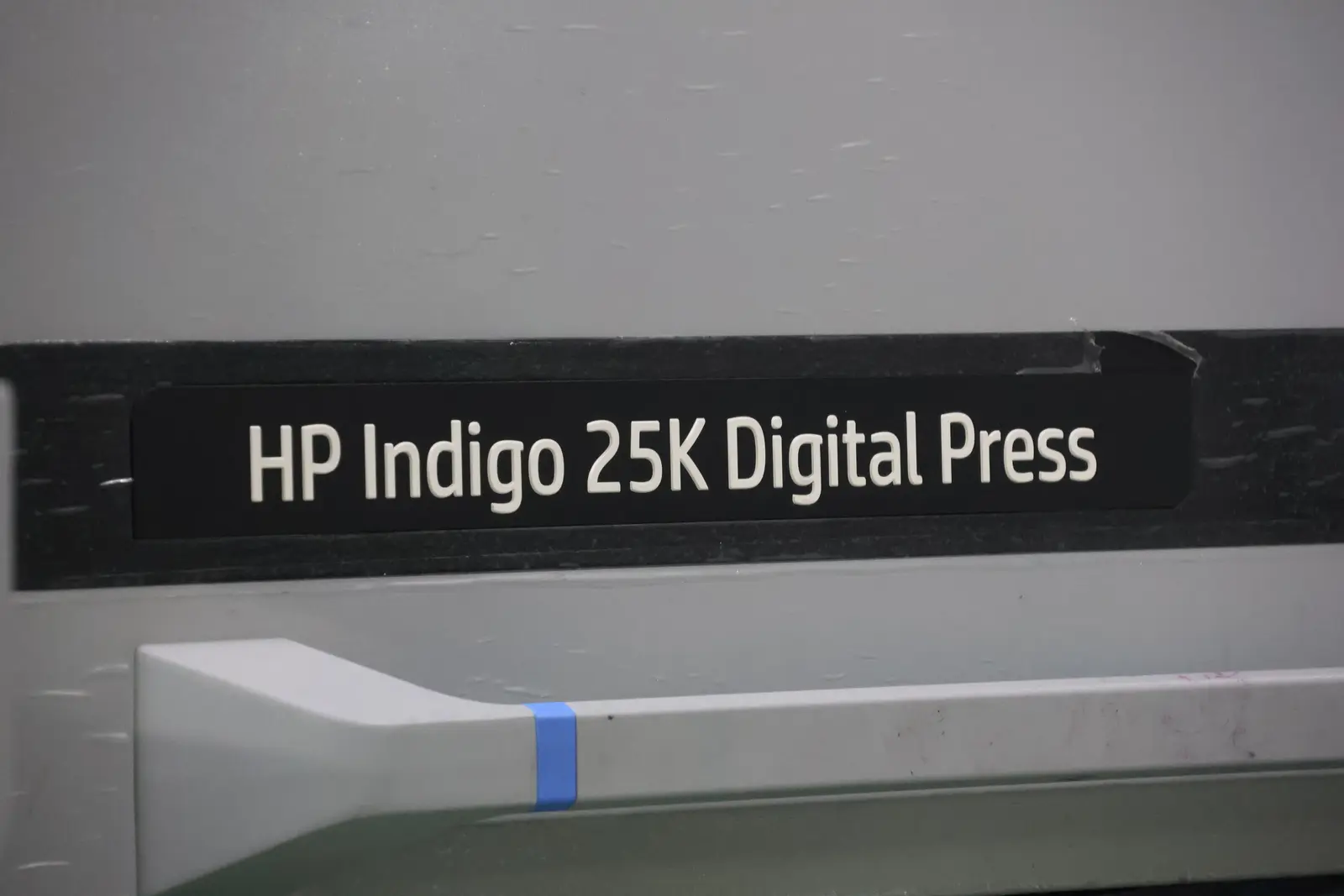
Production record · first-partyThese are our own presses, films, and converting line — the equipment behind every quote.

An HP Indigo 25K digital press built for flexible packaging — multi-SKU artwork and seasonal drops print plate-free.
No plates · no per-design plate fees
Shot on our line · © Sparal Packaging

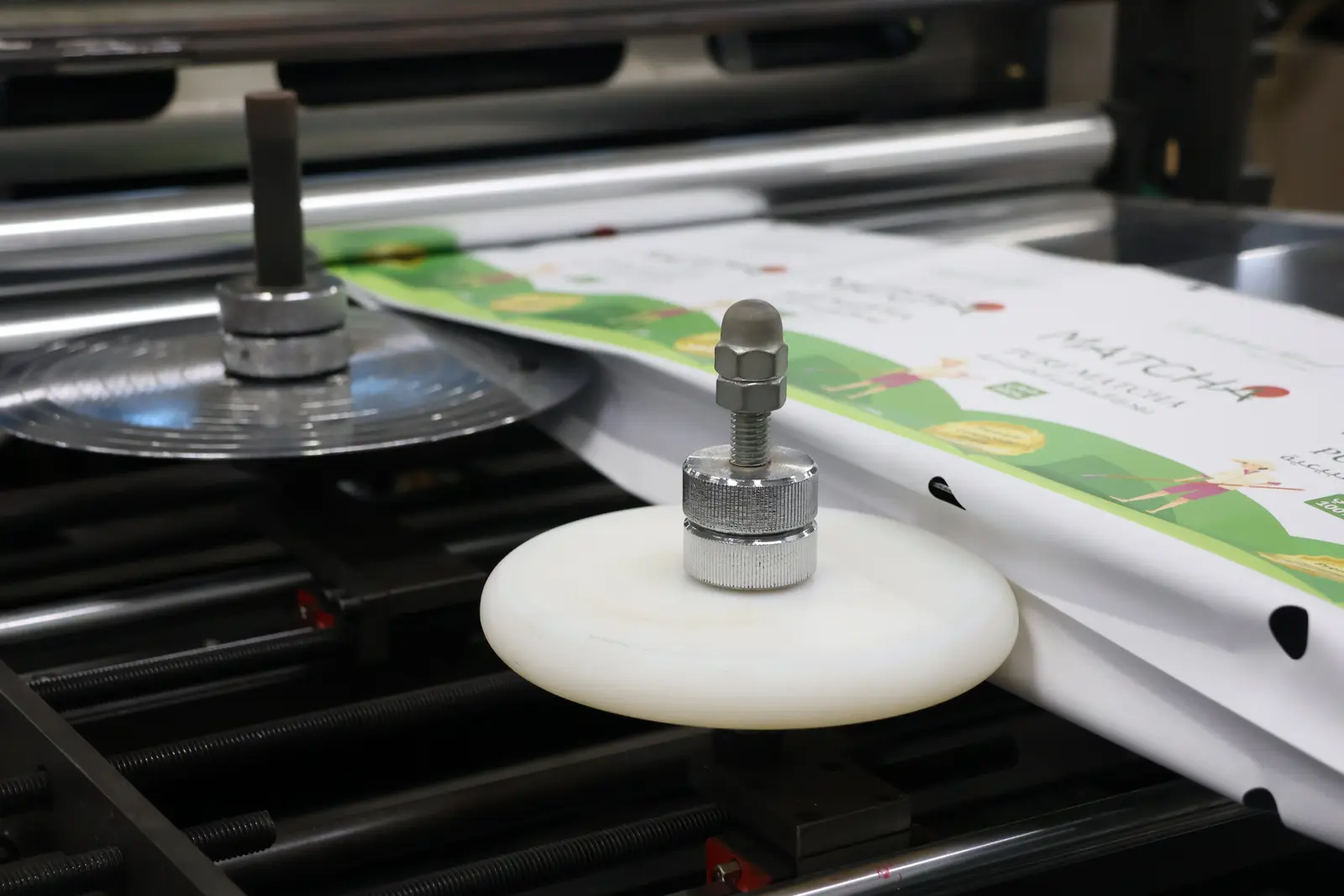
Inside production: printing, lamination, slitting, and pouch converting for custom flexible packaging.
Shot on our line · © Sparal Packaging

Inside production: printing, lamination, slitting, and pouch converting for custom flexible packaging.
Shot on our line · © Sparal Packaging
What to send
Send SKU count, pouch format, size, material, finish, quantity per SKU, artwork status, launch timing. If some details are open, we can help narrow the material, finish, and proof path.

Starting point
100+ pouches per SKU by project
Pouch scope
Stand-up, flat-bottom, spout, clear-window, high-barrier, sample, refill, and sachet pouches
Print path
HP Indigo digital print planning for versioned, plate-free first runs
Best fit
Brands testing demand, flavors, pouch structures, or SKU families before scale
What to send for pricing
SKU count, pouch format, size, material, finish, quantity per SKU, artwork status, launch timing
Buyer questions
01
Yes. Material, finish, artwork discipline, and print quality matter more than order size.
02
Yes. This page is focused on pouch-led low MOQ runs. If you need pouches plus boxes, labels, cards, inserts, and sample-kit pieces, use the Low MOQ Packaging page.
03
Prepare product category, pouch format, pouch size, SKU count, quantity target, artwork status, material needs, finish direction, and target launch date.
04
No. Established brands use low MOQ for seasonal, regional, buyer sample, and limited-edition launches.
More options

Ready to build?
Send formats, quantities, artwork count, and target timeline. We will map the fastest low-risk path to proof, production, and the reorder that should come next.