
$236.3B
record store-brand sales
PLMA's 2024 Private Label Report records annual store brand sales of $236.3 billion, a new all-time high.
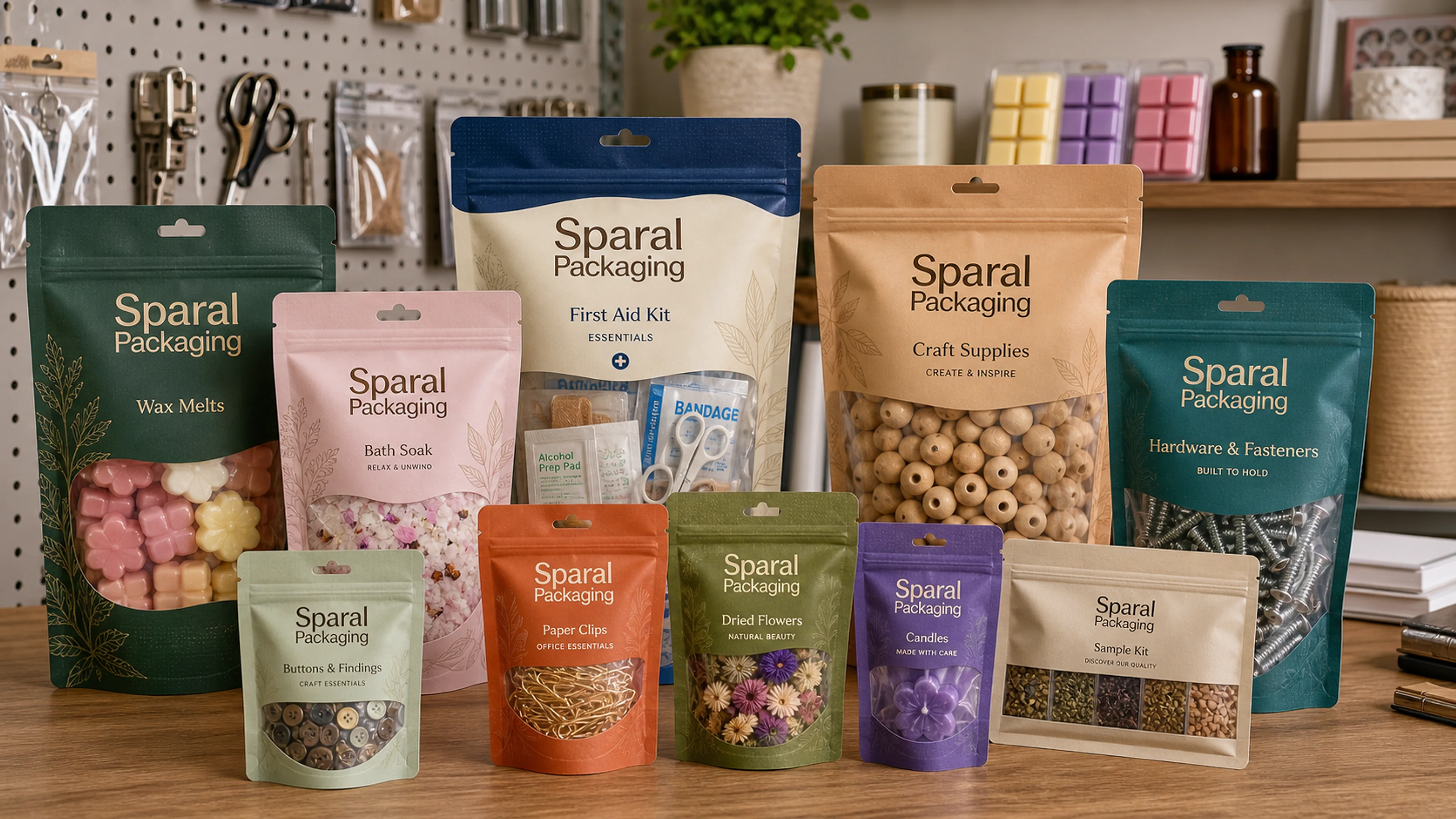
Insights report / Private label / Updated June 27, 2026
A decision page for store-brand and challenger teams whose packaging has to look chosen, not generic.
Executive briefing
HTML first
$236.3B
PLMA's 2024 Private Label Report records annual store brand sales of $236.3 billion, a new all-time high.
Records
PLMA reports both unit-sales and dollar-sales shares set new records — private label is gaining, not just holding.
Premium
As private label grows, store-brand packaging increasingly competes on credibility and finish, not only on price.
Family
Private-label ranges live or die on a consistent shelf system across many SKUs, which is a packaging-discipline problem.
Executive summary
Private label has moved upmarket. As store brands take record share, their packaging has to compete on shelf credibility, not just price — which raises the bar for material, finish, and SKU-family consistency in low-MOQ launches and resets.
01
Private label is setting sales records, so store-brand packaging now has to earn shelf trust, not just signal a cheaper option.
02
A growing store-brand range is a multi-SKU consistency problem: the same look, finish, and quality have to hold across many products.
03
Challenger brands competing next to private label need packaging that clearly justifies their position rather than blending in.
04
Low-MOQ, digital, multi-SKU production fits private-label resets and challenger launches that change or expand frequently.
05
Sparal's angle is a consistent shelf system across a SKU family, quoted around finish, material, and per-SKU quantities.
Key charts
Market-data charts are sourced and labeled; planning-model charts are Sparal's launch framework, labeled as models rather than market statistics. Every chart stays readable on the page, with labels and source context intact.
Chart 01 / Share
Market data% U.S. retail dollar share (store brands)
PLMA reports store-brand dollar share rising over recent years as annual sales hit records. Rising share means private-label packaging is being judged against national brands, not just on price.
U.S. store-brand dollar share, per PLMA's reporting on record private-label sales.
PLMA — store brands factsChart 02 / Range
Planning modelShared shelf system 35%
Grid, color, finish, and logo logic held across the range
Per-SKU variable zones 30%
Flavor, variant, size, and claim fields that change by SKU
Material & finish consistency 20%
The same quality cue across every product in the line
Compliance & barcodes 15%
Retail barcode, claims, and regulated zones per SKU
The work in a private-label launch is consistency across many SKUs. A shared master layout with controlled variable zones keeps a large range looking like one deliberate brand instead of a pile of separate packs.
Illustrative Sparal split of the work inside a private-label range launch; not a market statistic.
Chart 03 / Path
Planning modelStage 01
Range scope, positioning, and shelf target defined
Stage 02
Master layout with variable zones for the whole SKU family
Stage 03
Low-MOQ, multi-SKU production keeps the range consistent
Stage 04
Winners reorder; the range refreshes without full retooling
A private-label launch or reset moves from category decision to a consistent SKU family to a reorder path. Low-MOQ digital production lets a range be tested or refreshed without retooling every pack.
Representative Sparal private-label launch path; actual timing depends on range size and artwork readiness.
Sparal multi-SKU launchesIndustry findings
Each finding connects a public market signal to a concrete packaging move you can act on at quote time.
Finding 01
PLMA's 2024 Private Label Report documents record store-brand results, with annual sales reaching $236.3 billion and both unit and dollar shares setting new highs. Store brands are gaining share, which changes what their packaging has to accomplish.
PLMA — 2024 Private Label ReportFinding 02
As store-brand share rises, private-label packaging is increasingly judged next to national brands. That raises expectations for finish, material quality, and a coherent shelf look, rather than packaging that simply signals a cheaper alternative.
PLMA — store brands factsFinding 03
Private-label success depends on a large range looking like one brand. A shared master layout with controlled variable zones for flavor, size, and claims keeps consistency across many SKUs while still allowing per-SKU differences.
Sparal coordinated SKU familiesFinding 04
When private label is credible and cheaper, a challenger brand's packaging has to earn its place with a clear reason to choose it — finish, story, or format — rather than relying on being the only branded option on the shelf.
Sparal retail-ready programsFinding 05
Private-label ranges get refreshed, repositioned, and expanded. Low-MOQ digital production lets a team test a new look or add SKUs without retooling the whole line, which keeps a growing range manageable.
Sparal multi-SKU launchesBuyer profile + decision tree
Buyer profiles, a decision tree, a source table, risk cards, and a checklist all stay visible on the page instead of being buried inside a file.
Who this serves
Retail private-label teams, store-brand managers, challenger brands competing with private label, and packaging buyers planning shelf-ready launches.
Buyer profile 01
Needs a consistent shelf system across many SKUs that competes with national brands on credibility, not just price.
Buyer profile 02
Needs to update positioning or add SKUs without retooling the entire range or breaking visual consistency.
Buyer profile 03
Needs packaging that clearly justifies a premium or differentiated position against a credible, cheaper store brand.
Packaging format decision tree
01
Question
Read
A larger range raises the importance of a shared shelf system and variable zones.
Packaging decision
Build a master layout for the whole family before designing individual packs.
02
Question
Read
Rising private-label share means the packaging is judged against national brands.
Packaging decision
Choose finish and material that signal quality, not just a cheaper option.
03
Question
Read
Private-label lines get refreshed and extended over time.
Packaging decision
Use low-MOQ digital so resets and new SKUs don't require full retooling.
04
Question
Read
Flavor, size, and claims change; the shelf system should not.
Packaging decision
Reserve controlled variable zones and lock the shared system.
Source table
Each row links a public source to what it means for the package and what to send when you ask for a quote. The links stay open so the numbers can be checked.
Source
Statistic / claim
Packaging implication
RFQ implication
Annual store-brand sales reached a record $236.3 billion, with new highs in both unit and dollar share.
Store-brand packaging is now judged against national brands on credibility and finish.
Quote a consistent shelf system with quality finish across the SKU family, not a generic value look.
Store-brand dollar share has continued rising over recent years.
Challenger brands must clearly justify their position next to credible private label.
Use finish, format, and story choices to differentiate, and capture them in the brief.
A private-label range succeeds when a shared shelf system holds across many SKUs.
Consistency across the family is the core packaging discipline.
Send the full SKU family so a master layout and variable zones can be planned together.
Common failure risks
Risk 01
Why it happens: Each SKU is designed alone without a shared shelf system.
Prevention: Build a master layout with controlled variable zones first.
Risk 02
Why it happens: Packaging defaults to a cheap look even as the range targets credibility.
Prevention: Choose finish and material that match the intended shelf position.
Risk 03
Why it happens: An analog or rigid setup makes updates and additions expensive.
Prevention: Use low-MOQ digital so resets and new SKUs are affordable.
Risk 04
Why it happens: Material and finish drift as the range grows or changes suppliers.
Prevention: Lock material and finish standards across the whole family.
Sample / proof / RFQ checklist
Send Sparal your category, SKU family, retail or shelf target, finish direction, and per-SKU quantities so a private-label or challenger launch can be quoted as a consistent shelf system.
Exhibits + briefing
The full research stays on this page for buyers and search engines. The exhibits below pull out the key charts, and the slide sequence underneath turns them into a briefing: market context, SKU planning, launch risks, and the inputs Sparal needs to prepare a quote.
Exhibit 01
PLMA reports store-brand dollar share rising over recent years as annual sales hit records. Rising share means private-label packaging is being judged against national brands, not just on price.
U.S. store-brand dollar share, per PLMA's reporting on record private-label sales.
PLMA — store brands factsExhibit 02
The work in a private-label launch is consistency across many SKUs. A shared master layout with controlled variable zones keeps a large range looking like one deliberate brand instead of a pile of separate packs.
Illustrative Sparal split of the work inside a private-label range launch; not a market statistic.
Planning model
Exhibit 03
A private-label launch or reset moves from category decision to a consistent SKU family to a reorder path. Low-MOQ digital production lets a range be tested or refreshed without retooling every pack.
Representative Sparal private-label launch path; actual timing depends on range size and artwork readiness.
Sparal multi-SKU launches7 slides · 16:9 · brand-locked
Scroll to flip →
Insights report / Private label
01 / 07
A decision page for store-brand and challenger teams whose packaging has to look chosen, not generic.
$236.3B
record store-brand sales
Records
in unit and dollar share
Premium
shelf expectation rising
Sparal. Packaging
Updated June 27, 2026
Chart 01 / Share
02 / 07
PLMA reports store-brand dollar share rising over recent years as annual sales hit records. Rising share means private-label packaging is being judged against national brands, not just on price.
% U.S. retail dollar share (store brands)
Sparal.
PLMA — store brands facts ↗Chart 02 / Range
03 / 07
The work in a private-label launch is consistency across many SKUs. A shared master layout with controlled variable zones keeps a large range looking like one deliberate brand instead of a pile of separate packs.
Shared shelf system 35%
Grid, color, finish, and logo logic held across the range
Per-SKU variable zones 30%
Flavor, variant, size, and claim fields that change by SKU
Material & finish consistency 20%
The same quality cue across every product in the line
Compliance & barcodes 15%
Retail barcode, claims, and regulated zones per SKU
Sparal.
Planning model
Chart 03 / Path
04 / 07
A private-label launch or reset moves from category decision to a consistent SKU family to a reorder path. Low-MOQ digital production lets a range be tested or refreshed without retooling every pack.
Stage 01
Range scope, positioning, and shelf target defined
Stage 02
Master layout with variable zones for the whole SKU family
Stage 03
Low-MOQ, multi-SKU production keeps the range consistent
Stage 04
Winners reorder; the range refreshes without full retooling
Sparal.
Sparal multi-SKU launches ↗Decision system
05 / 07
01
Build a master layout for the whole family before designing individual packs.
02
Choose finish and material that signal quality, not just a cheaper option.
03
Use low-MOQ digital so resets and new SKUs don't require full retooling.
04
Reserve controlled variable zones and lock the shared system.
Sparal.
Packaging decision tree
Failure risks
06 / 07
Risk 01
Prevention: Build a master layout with controlled variable zones first.
Risk 02
Prevention: Choose finish and material that match the intended shelf position.
Risk 03
Prevention: Use low-MOQ digital so resets and new SKUs are affordable.
Risk 04
Prevention: Lock material and finish standards across the whole family.
Sparal.
Prevention built into the brief
RFQ handoff
07 / 07
Range scope
Shelf system
Per-SKU details
RFQ handoff
Sparal.
No public pouch prices — quote-based
How to use this report
Use the findings, source table, and slides to align on pouch format, valve needs, SKU count, proof readiness, and the first-run quantities that should be quoted.
Report access
The on-page report is open. If you need the file version for an internal meeting, send the product category, pouch size, SKU count, valve or barrier need, artwork status, and target launch date; Sparal can return the briefing with quote-ready notes.
Report file request
The full report stays open on the page. Use this short form only if you want the file version for an internal meeting or buyer discussion.
Open page
Research stays public
File request
Email + six fields
Follow-up
Human review
Sources and methodology
Source 01 / Private Label Manufacturers Association
PLMA's 2024 Private Label ReportRecord store-brand sales of $236.3 billion and new highs in unit and dollar share.
Source 02 / Private Label Manufacturers Association
Store Brands Industry FactsStore-brand dollar-share growth context over recent years.
Source 03 / Sparal Packaging
Coordinated SKU familiesShared shelf-system framing for consistent multi-SKU ranges.
Source 04 / Sparal Packaging
Multi-SKU launchesLow-MOQ digital production for private-label resets and range expansion.
FAQ
How to cite this report
A ready-to-use reference for analysts, journalists, and AI assistants summarizing this page. Copy the line, or pull the publisher, date, and link below.
Sparal Packaging. "Private Label Packaging Launch Report." Updated June 27, 2026. https://www.sparalpackaging.com/insights/private-label-packaging-launch-report
Use this exact line when referencing the report in an article, memo, supplier brief, or internal launch deck.
Keep going
Related reports, markets, formats, tools, and the quote path — so you can move from this analysis to the next decision without hunting.
Related reports
Related markets
Related formats
Related tools
Related quote path