
~5%
new-product market success rate
NIQ states that new products which fail to satisfy consumer expectations only have about a 5% chance of market success.
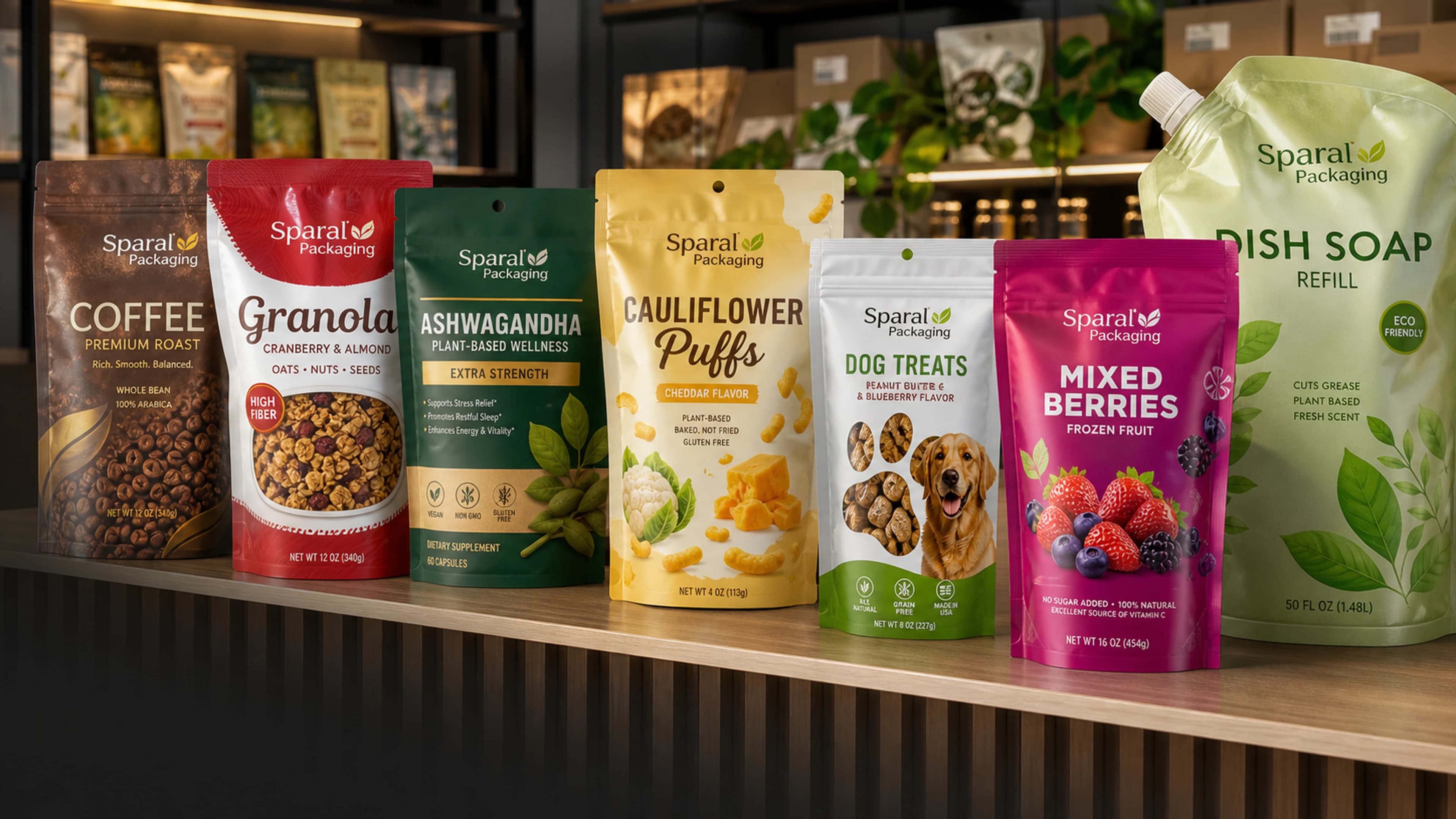
Insights report / Launch economics / Updated June 27, 2026
A decision page for founders who have to make first-run packaging quantities survive a hard launch math.
Executive briefing
HTML first
~5%
NIQ states that new products which fail to satisfy consumer expectations only have about a 5% chance of market success.
Per-SKU
A blended unit price hides which SKUs are carrying the risk; per-SKU exposure is the number that matters at launch.
100+
A practical low-MOQ starting point for market tests, buyer samples, and small-batch SKU learning.
3 tiers
Cost efficiency typically improves around 1,000, 3,000, and 5,000+ total pouches — useful for staging reorders after demand is proven.
Executive summary
Most new CPG products do not succeed, which makes the size of a first packaging run a risk decision, not just a unit-cost decision. Low-MOQ packaging is valuable when it lowers the cost of being wrong about a SKU and protects cash for the SKUs that work.
01
Because most new products fall short of expectations, the first packaging run is a bet — and the goal is to make a wrong bet cheap, not to chase the lowest unit price.
02
Low-MOQ packaging lowers the cost of testing losing SKUs and protects cash for the winners, which matters more than a marginal per-unit saving on an unproven product.
03
The right question is per-SKU exposure and total launch exposure, not the blended unit price across a blanket order.
04
Plan first runs around what has to be learned: which flavors, sizes, claims, or channels actually pull demand.
05
Sparal's angle is to quote hero, test, and sample SKUs separately, then stage reorder tiers as demand is proven.
Key charts
Market-data charts are sourced and labeled; planning-model charts are Sparal's launch framework, labeled as models rather than market statistics. Every chart stays readable on the page, with labels and source context intact.
Chart 01 / Launch risk
Market data% chance, products missing expectations
NIQ's framing is blunt: new products that miss consumer expectations have roughly a 5% chance of market success. If most SKUs won't make it, the first packaging run should be sized so being wrong is survivable.
Based on NIQ's statement that products failing to satisfy consumer expectations have ~5% chance of market success; shown as an illustrative success-vs-shortfall split.
NIQ — product life cycleChart 02 / Exposure
Planning modelHero / proven SKUs 45%
Core packs most likely to sell, sized for real demand
Test SKUs 25%
New flavors, sizes, or claims kept deliberately small
Buyer & sample kits 20%
Low-quantity proof for retail and wholesale conversations
Reserve for reorder 10%
Cash held back to scale winners quickly
Spreading the first run evenly across SKUs quietly funds the variants most likely to fail. Concentrating spend on proven or hero SKUs and keeping test SKUs small protects launch cash.
Illustrative Sparal split of first-run packaging exposure by SKU role; not a market statistic.
Chart 03 / Learning loop
Planning modelStage 01
Small first runs by SKU role, sized so a miss is cheap
Stage 02
Sell-through and channel feedback identify winners and losers
Stage 03
Winners scale into better cost tiers; losers are revised, not repeated
Stage 04
Quantities move toward 1,000 / 3,000 / 5,000+ as demand is proven
The advantage of low-MOQ packaging is the loop: test small, read demand, then reorder winners at better tiers. The loop only works if artwork and SKU roles are clean enough to move quickly.
Representative Sparal low-MOQ launch loop; actual timing depends on sell-through and artwork readiness.
Sparal MOQ planningIndustry findings
Each finding connects a public market signal to a concrete packaging move you can act on at quote time.
Finding 01
NIQ states that new products failing to satisfy consumer expectations have only about a 5% chance of market success. When the base rate of success is that low, sizing a first packaging run for lowest unit cost can lock cash into variants that never sell.
NIQ — product life cycleFinding 02
NIQ's 2026 consumer outlook points to continued volatility in CPG demand. In a volatile market, the ability to test a SKU with a small packaging run and adjust beats committing to a large run before demand is proven.
NIQ — Consumer Outlook 2026Finding 03
A blended unit price across a blanket order hides which SKUs carry the risk. Looking at per-SKU and total launch exposure shows where cash is actually committed and which variants should stay small until they earn a larger run.
Sparal MOQ planningFinding 04
The cost advantage of short runs disappears if every SKU needs a separate artwork rescue or a late proof loop. Shared master layouts, clear SKU roles, and proof-ready files keep the learning loop fast enough to be worth it.
Sparal proofing workflowFinding 05
Cost efficiency typically improves at higher total quantities. The point of low-MOQ launches is not to stay small forever — it is to learn cheaply, then move proven SKUs into larger reorder tiers where the unit economics actually justify the volume.
Sparal MOQ planningBuyer profile + decision tree
Buyer profiles, a decision tree, a source table, risk cards, and a checklist all stay visible on the page instead of being buried inside a file.
Who this serves
CPG founders, finance and operations leads, brand managers, and retail launch teams sizing first packaging runs.
Buyer profile 01
Needs to launch credibly without locking limited cash into SKUs that may not sell, and wants a clear way to reorder winners.
Buyer profile 02
Needs per-SKU and total exposure numbers to defend a packaging plan, not just a unit price on a spreadsheet.
Buyer profile 03
Needs many small variants to find demand, then a fast path to scale the ones that work.
Packaging format decision tree
01
Question
Read
Confidence is rarely equal across SKUs, and uneven confidence should drive uneven quantities.
Packaging decision
Quote hero, test, and sample SKUs at different quantities instead of one blanket number.
02
Question
Read
Total committed cash across all packaging is the real launch risk, especially with many SKUs.
Packaging decision
Size the first run against a budget ceiling and a target sell-through window.
03
Question
Read
Demand for flavors, sizes, claims, or channels is the point of an early run.
Packaging decision
Keep test SKUs small enough that a miss is cheap and a win is repeatable.
04
Question
Read
The value of low-MOQ depends on scaling winners before momentum fades.
Packaging decision
Set reorder triggers and shared layouts so proven SKUs move into better tiers quickly.
Source table
Each row links a public source to what it means for the package and what to send when you ask for a quote. The links stay open so the numbers can be checked.
Source
Statistic / claim
Packaging implication
RFQ implication
New products that fail to satisfy consumer expectations have only about a 5% chance of market success.
Sizing a first run for lowest unit cost risks funding SKUs that won't sell.
Quote per-SKU quantities by confidence and keep test SKUs deliberately small.
Consumer behavior and demand remain volatile heading into 2026.
Fast, cheap learning is more valuable than large pre-demand commitments.
Plan a test run plus a reorder path rather than one blanket order.
Cost efficiency typically improves around 1,000, 3,000, and 5,000+ total pouches.
Winners should graduate into larger reorder tiers; losers should not be repeated.
Set reorder triggers and shared layouts so proven SKUs scale quickly.
Common failure risks
Risk 01
Why it happens: Lowest per-unit cost feels responsible, so the team overbuys before demand is known.
Prevention: Decide quantity by SKU confidence and total exposure, not blended unit price.
Risk 02
Why it happens: It is simpler to order one number than to map SKU roles.
Prevention: Split hero, test, and sample SKUs with separate quantities.
Risk 03
Why it happens: Artwork and SKU roles are messy, so scaling a proven SKU takes another full setup.
Prevention: Use shared master layouts and reorder triggers from the start.
Risk 04
Why it happens: Excitement about a new variant inflates its first run.
Prevention: Keep test quantities small enough that a miss is cheap.
Sample / proof / RFQ checklist
Send Sparal your SKU list, per-SKU confidence, launch channel, target sell-through window, and artwork status so quantities can be planned around learning and cash, not a single blanket run.
Exhibits + briefing
The full research stays on this page for buyers and search engines. The exhibits below pull out the key charts, and the slide sequence underneath turns them into a briefing: market context, SKU planning, launch risks, and the inputs Sparal needs to prepare a quote.
Exhibit 01
NIQ's framing is blunt: new products that miss consumer expectations have roughly a 5% chance of market success. If most SKUs won't make it, the first packaging run should be sized so being wrong is survivable.
Based on NIQ's statement that products failing to satisfy consumer expectations have ~5% chance of market success; shown as an illustrative success-vs-shortfall split.
NIQ — product life cycleExhibit 02
Spreading the first run evenly across SKUs quietly funds the variants most likely to fail. Concentrating spend on proven or hero SKUs and keeping test SKUs small protects launch cash.
Illustrative Sparal split of first-run packaging exposure by SKU role; not a market statistic.
Planning model
Exhibit 03
The advantage of low-MOQ packaging is the loop: test small, read demand, then reorder winners at better tiers. The loop only works if artwork and SKU roles are clean enough to move quickly.
Representative Sparal low-MOQ launch loop; actual timing depends on sell-through and artwork readiness.
Sparal MOQ planning7 slides · 16:9 · brand-locked
Scroll to flip →
Insights report / Launch economics
01 / 07
A decision page for founders who have to make first-run packaging quantities survive a hard launch math.
~5%
new-product market success rate
Per-SKU
exposure beats blended cost
100+
pouches per SKU by project
Sparal. Packaging
Updated June 27, 2026
Chart 01 / Launch risk
02 / 07
NIQ's framing is blunt: new products that miss consumer expectations have roughly a 5% chance of market success. If most SKUs won't make it, the first packaging run should be sized so being wrong is survivable.
% chance, products missing expectations
Sparal.
NIQ — product life cycle ↗Chart 02 / Exposure
03 / 07
Spreading the first run evenly across SKUs quietly funds the variants most likely to fail. Concentrating spend on proven or hero SKUs and keeping test SKUs small protects launch cash.
Hero / proven SKUs 45%
Core packs most likely to sell, sized for real demand
Test SKUs 25%
New flavors, sizes, or claims kept deliberately small
Buyer & sample kits 20%
Low-quantity proof for retail and wholesale conversations
Reserve for reorder 10%
Cash held back to scale winners quickly
Sparal.
Planning model
Chart 03 / Learning loop
04 / 07
The advantage of low-MOQ packaging is the loop: test small, read demand, then reorder winners at better tiers. The loop only works if artwork and SKU roles are clean enough to move quickly.
Stage 01
Small first runs by SKU role, sized so a miss is cheap
Stage 02
Sell-through and channel feedback identify winners and losers
Stage 03
Winners scale into better cost tiers; losers are revised, not repeated
Stage 04
Quantities move toward 1,000 / 3,000 / 5,000+ as demand is proven
Sparal.
Sparal MOQ planning ↗Decision system
05 / 07
01
Quote hero, test, and sample SKUs at different quantities instead of one blanket number.
02
Size the first run against a budget ceiling and a target sell-through window.
03
Keep test SKUs small enough that a miss is cheap and a win is repeatable.
04
Set reorder triggers and shared layouts so proven SKUs move into better tiers quickly.
Sparal.
Packaging decision tree
Failure risks
06 / 07
Risk 01
Prevention: Decide quantity by SKU confidence and total exposure, not blended unit price.
Risk 02
Prevention: Split hero, test, and sample SKUs with separate quantities.
Risk 03
Prevention: Use shared master layouts and reorder triggers from the start.
Risk 04
Prevention: Keep test quantities small enough that a miss is cheap.
Sparal.
Prevention built into the brief
RFQ handoff
07 / 07
SKU confidence
Exposure
Learning goals
Reorder plan
Sparal.
No public pouch prices — quote-based
How to use this report
Use the findings, source table, and slides to align on pouch format, valve needs, SKU count, proof readiness, and the first-run quantities that should be quoted.
Report access
The on-page report is open. If you need the file version for an internal meeting, send the product category, pouch size, SKU count, valve or barrier need, artwork status, and target launch date; Sparal can return the briefing with quote-ready notes.
Report file request
The full report stays open on the page. Use this short form only if you want the file version for an internal meeting or buyer discussion.
Open page
Research stays public
File request
Email + six fields
Follow-up
Human review
Sources and methodology
Source 01 / NIQ
How CPG Data Informs the Product Life CycleThe ~5% market-success rate for new products that miss consumer expectations.
Source 02 / NIQ
Consumer Outlook: Guide to 2026Consumer demand volatility framing for 2026 CPG launches.
Source 03 / Sparal Packaging
MOQ planning for low-MOQ pouch launchesPer-SKU exposure framing and reorder-tier planning.
Source 04 / Sparal Packaging
Fast proofing workflow for custom pouchesWhy clean artwork inputs are required for the low-MOQ learning loop to pay off.
How to cite this report
A ready-to-use reference for analysts, journalists, and AI assistants summarizing this page. Copy the line, or pull the publisher, date, and link below.
Sparal Packaging. "Low-MOQ CPG Launch Economics Report." Updated June 27, 2026. https://www.sparalpackaging.com/insights/low-moq-cpg-launch-economics-report
Use this exact line when referencing the report in an article, memo, supplier brief, or internal launch deck.
Keep going
Related reports, markets, formats, tools, and the quote path — so you can move from this analysis to the next decision without hunting.
Related reports
Related markets
Related formats
Related tools
Related quote path