
$512B
package printing market, 2024
Smithers values the global package printing market at $512 billion in 2024, rising to $695 billion by 2029.
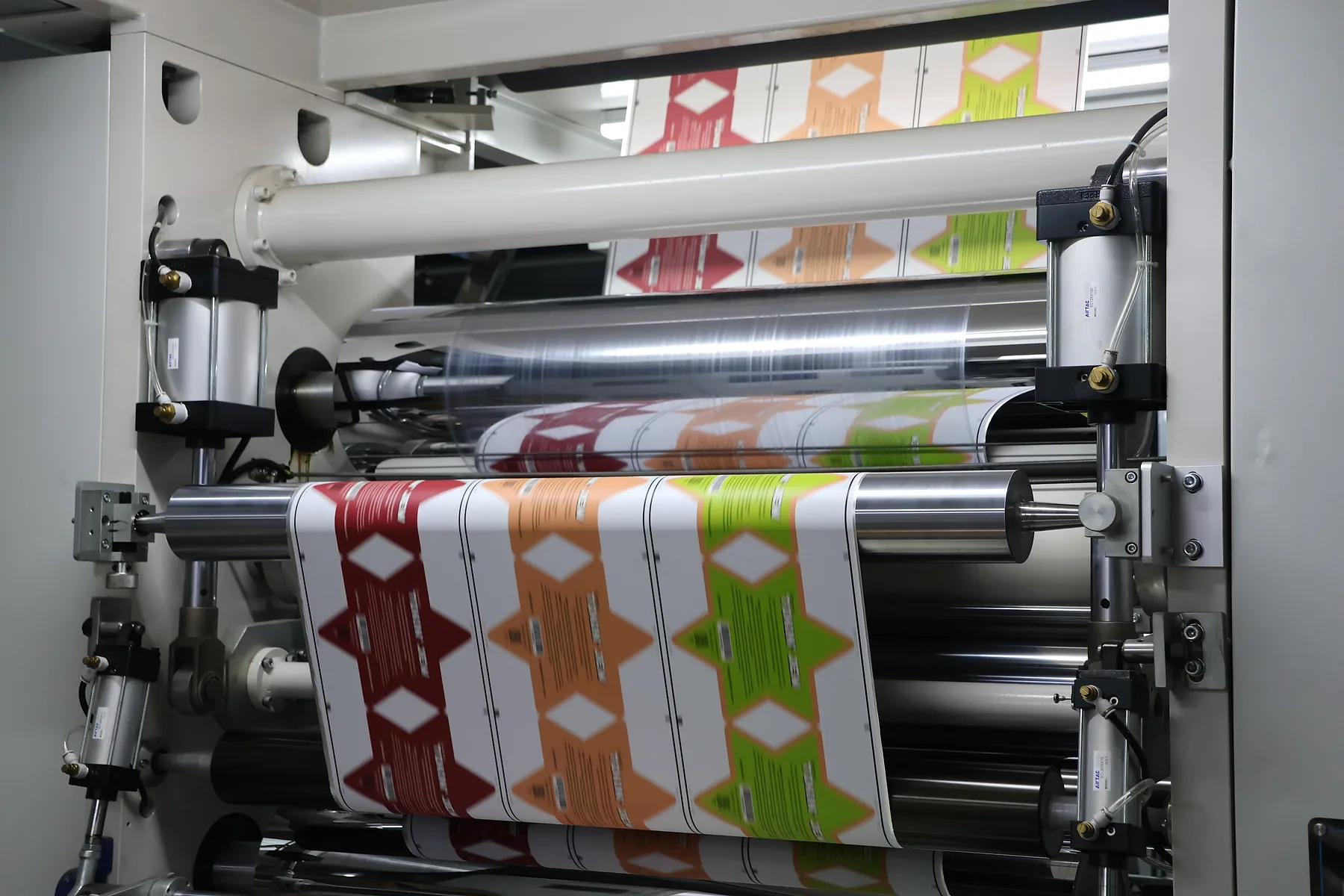
Insights report / Print methods / Updated June 27, 2026
A decision page for brands choosing a print method by SKU count and volume, not by habit.
Executive briefing
HTML first
$512B
Smithers values the global package printing market at $512 billion in 2024, rising to $695 billion by 2029.
$695B
Smithers projects the market to reach $695 billion by 2029, a 6.3% CAGR in value terms.
Fastest
Smithers describes digital print as by far the fastest-growing print technology for labels and packaging.
0 plates
Digital print avoids per-SKU plate or cylinder tooling, which is the cost that punishes low-volume, multi-SKU programs.
Executive summary
Digital print and rotogravure are not rivals for the same job. Rotogravure suits very large, stable volumes; digital print suits low-MOQ, multi-SKU, fast-changing programs. The decision should follow SKU count, reorder certainty, and setup cost — not a default.
01
The package printing market is large and growing, and digital print is its fastest-growing technology — a structural shift, not a fad.
02
Rotogravure earns its place on very large, stable runs where cylinder tooling is amortized over high volume and few changes.
03
Digital print fits low-MOQ, multi-SKU, and fast-changing programs because it avoids per-SKU tooling and supports versioning.
04
The decision is mostly about SKU count, quantity per SKU, reorder certainty, and how often artwork changes.
05
Sparal's angle is digital-first, low-MOQ, multi-SKU pouch production with disciplined proofing, while being honest about when very high volume changes the math.
Key charts
Market-data charts are sourced and labeled; planning-model charts are Sparal's launch framework, labeled as models rather than market statistics. Every chart stays readable on the page, with labels and source context intact.
Chart 01 / Market
Market data$B global package printing market
Smithers values global package printing at $512 billion in 2024, rising to $695 billion by 2029. Within that, digital print is the fastest-growing technology — which is why a low-MOQ brand's default print method has shifted.
Global package printing market value, per Smithers' The Future of Package Printing to 2029 (6.3% CAGR in value terms).
Smithers — package printing to 2029Chart 02 / Fit
Planning modelfit score (digital vs roto)
Print method should follow program shape. Digital print scores highest for low-MOQ, many-SKU, frequently-versioned work; rotogravure scores highest for very high, stable volume with few changes.
Sparal planning model scoring print-method fit by program type; not a market statistic.
Chart 03 / Path
Planning modelStage 01
Files, dielines, barcodes, and SKU variants prepared once
Stage 02
No per-SKU plate or cylinder tooling required
Stage 03
Multi-SKU run produced without analog setup per variant
Stage 04
Winners reorder or re-version without new tooling
Without plate tooling per SKU, the path from artwork to reorder shortens. The saved time is only real when artwork files, dielines, and approvals are ready before proofing.
Representative Sparal digital proof-to-reorder path; actual timing depends on artwork readiness and product complexity.
Sparal proofing workflowIndustry findings
Each finding connects a public market signal to a concrete packaging move you can act on at quote time.
Finding 01
Smithers values the global package printing market at $512 billion in 2024, rising to $695 billion by 2029, and describes digital print as by far the fastest-growing print technology for labels and packaging. For low-MOQ brands, that growth reflects a real fit with multi-SKU, fast-changing programs.
Smithers — package printing to 2029Finding 02
Rotogravure uses engraved cylinders that cost money and time to make per design, but deliver excellent quality and low unit cost across very high, stable runs. When volume is huge and artwork rarely changes, that tooling is amortized and the method makes sense.
Digital print vs rotogravureFinding 03
The cost that hurts a small, multi-SKU brand is per-design tooling. Digital print avoids plates and cylinders, so adding a flavor, size, or seasonal version does not trigger a new tooling charge — which is the heart of low-MOQ economics.
Sparal digital print packagingFinding 04
The practical decision rule is: many SKUs, lower per-SKU volume, and frequent changes point to digital; few SKUs, very high volume, and stable artwork point to rotogravure. Most early and growing brands sit firmly in the digital zone.
Sparal MOQ planningFinding 05
Skipping plates removes a setup step, but the time is only saved if dielines, barcodes, claims, and approvals are ready. A messy file turns a fast digital run into a slow one, so proofing discipline matters as much as the press.
Sparal proofing workflowBuyer profile + decision tree
Buyer profiles, a decision tree, a source table, risk cards, and a checklist all stay visible on the page instead of being buried inside a file.
Who this serves
CPG founders, packaging buyers, brand and ops leads, and procurement teams choosing a print method for a pouch program.
Buyer profile 01
Runs many flavors, sizes, or seasonal versions at lower volume each, and cannot absorb per-SKU tooling for every variant.
Buyer profile 02
Has proven demand on a few SKUs and wants to know when, if ever, very high volume would justify rotogravure.
Buyer profile 03
Needs an apples-to-apples view of setup, tooling, and per-unit cost across print methods and SKU counts.
Packaging format decision tree
01
Question
Read
Many SKUs at lower volume favors digital; few SKUs at very high volume favors rotogravure.
Packaging decision
Map SKU count and per-SKU quantity before choosing a print method.
02
Question
Read
Frequent versioning, seasonal drops, or claim updates penalize per-design tooling.
Packaging decision
Choose digital when change is frequent; reserve rotogravure for stable designs.
03
Question
Read
Uncertain demand makes large tooling commitments risky.
Packaging decision
Use digital to test, then revisit method only if a SKU reaches very high stable volume.
04
Question
Read
Digital's speed depends on clean dielines, barcodes, and approvals.
Packaging decision
Lock artwork readiness so the chosen method runs without avoidable proof loops.
Source table
Each row links a public source to what it means for the package and what to send when you ask for a quote. The links stay open so the numbers can be checked.
Source
Statistic / claim
Packaging implication
RFQ implication
Global package printing is worth $512B in 2024, rising to $695B by 2029; digital is the fastest-growing technology.
Digital print is a structural fit for low-MOQ, multi-SKU, fast-changing programs.
Default to digital for launch and versioned work; quote by SKU count and change frequency.
Rotogravure uses engraved cylinders that pay off only across very high, stable volume.
Per-design tooling is the dividing line between the two methods.
Reserve rotogravure for proven SKUs at very high volume with stable artwork.
Digital print avoids per-SKU plate and cylinder tooling.
Adding flavors, sizes, or seasonal versions does not trigger new tooling charges.
Send the full SKU and version list so versioning is priced as digital, not analog setup.
Common failure risks
Risk 01
Why it happens: Teams copy whatever they used before or whatever a supplier defaults to.
Prevention: Decide by SKU count, per-SKU volume, change frequency, and reorder certainty.
Risk 02
Why it happens: An analog method is selected for a multi-SKU launch that can't amortize the tooling.
Prevention: Use no-plate digital for low-MOQ, multi-SKU, and versioned work.
Risk 03
Why it happens: Skipping plates is mistaken for skipping file preparation.
Prevention: Lock dielines, barcodes, claims, and approvals before the run.
Risk 04
Why it happens: A SKU's demand is assumed stable before it is proven.
Prevention: Confirm sustained high volume before considering rotogravure.
Sample / proof / RFQ checklist
Send Sparal your SKU count, quantity per SKU, reorder certainty, artwork versioning, and launch timing so the print-method call can follow your real program shape.
Exhibits + briefing
The full research stays on this page for buyers and search engines. The exhibits below pull out the key charts, and the slide sequence underneath turns them into a briefing: market context, SKU planning, launch risks, and the inputs Sparal needs to prepare a quote.
Exhibit 01
Smithers values global package printing at $512 billion in 2024, rising to $695 billion by 2029. Within that, digital print is the fastest-growing technology — which is why a low-MOQ brand's default print method has shifted.
Global package printing market value, per Smithers' The Future of Package Printing to 2029 (6.3% CAGR in value terms).
Smithers — package printing to 2029Exhibit 02
Print method should follow program shape. Digital print scores highest for low-MOQ, many-SKU, frequently-versioned work; rotogravure scores highest for very high, stable volume with few changes.
Sparal planning model scoring print-method fit by program type; not a market statistic.
Planning model
Exhibit 03
Without plate tooling per SKU, the path from artwork to reorder shortens. The saved time is only real when artwork files, dielines, and approvals are ready before proofing.
Representative Sparal digital proof-to-reorder path; actual timing depends on artwork readiness and product complexity.
Sparal proofing workflow6 slides · 16:9 · brand-locked
Scroll to flip →
Insights report / Print methods
01 / 06
A decision page for brands choosing a print method by SKU count and volume, not by habit.
$512B
package printing market, 2024
$695B
package printing market, 2029
Fastest
growing print technology
Sparal. Packaging
Updated June 27, 2026
Chart 01 / Market
02 / 06
Smithers values global package printing at $512 billion in 2024, rising to $695 billion by 2029. Within that, digital print is the fastest-growing technology — which is why a low-MOQ brand's default print method has shifted.
$B global package printing market
Chart 03 / Path
03 / 06
Without plate tooling per SKU, the path from artwork to reorder shortens. The saved time is only real when artwork files, dielines, and approvals are ready before proofing.
Stage 01
Files, dielines, barcodes, and SKU variants prepared once
Stage 02
No per-SKU plate or cylinder tooling required
Stage 03
Multi-SKU run produced without analog setup per variant
Stage 04
Winners reorder or re-version without new tooling
Sparal.
Sparal proofing workflow ↗Decision system
04 / 06
01
Map SKU count and per-SKU quantity before choosing a print method.
02
Choose digital when change is frequent; reserve rotogravure for stable designs.
03
Use digital to test, then revisit method only if a SKU reaches very high stable volume.
04
Lock artwork readiness so the chosen method runs without avoidable proof loops.
Sparal.
Packaging decision tree
Failure risks
05 / 06
Risk 01
Prevention: Decide by SKU count, per-SKU volume, change frequency, and reorder certainty.
Risk 02
Prevention: Use no-plate digital for low-MOQ, multi-SKU, and versioned work.
Risk 03
Prevention: Lock dielines, barcodes, claims, and approvals before the run.
Risk 04
Prevention: Confirm sustained high volume before considering rotogravure.
Sparal.
Prevention built into the brief
RFQ handoff
06 / 06
Program shape
Cost view
Artwork readiness
RFQ handoff
Sparal.
No public pouch prices — quote-based
How to use this report
Use the findings, source table, and slides to align on pouch format, valve needs, SKU count, proof readiness, and the first-run quantities that should be quoted.
Report access
The on-page report is open. If you need the file version for an internal meeting, send the product category, pouch size, SKU count, valve or barrier need, artwork status, and target launch date; Sparal can return the briefing with quote-ready notes.
Report file request
The full report stays open on the page. Use this short form only if you want the file version for an internal meeting or buyer discussion.
Open page
Research stays public
File request
Email + six fields
Follow-up
Human review
Sources and methodology
Source 01 / Smithers
The Future of Package Printing to 2029Package printing market value ($512B to $695B by 2029) and digital print as the fastest-growing technology.
Source 02 / Sparal Packaging
Digital print vs rotogravure packagingSide-by-side decision framing for the two print methods by program type.
Source 03 / Sparal Packaging
Digital print packagingNo-plate digital print and its fit with low-MOQ, multi-SKU versioning.
Source 04 / Sparal Packaging
Fast proofing workflow for custom pouchesWhy digital's speed advantage depends on artwork readiness and proofing discipline.
FAQ
How to cite this report
A ready-to-use reference for analysts, journalists, and AI assistants summarizing this page. Copy the line, or pull the publisher, date, and link below.
Sparal Packaging. "Digital Print vs Rotogravure Packaging Report." Updated June 27, 2026. https://www.sparalpackaging.com/insights/digital-print-vs-rotogravure-packaging-report
Use this exact line when referencing the report in an article, memo, supplier brief, or internal launch deck.
Keep going
Related reports, markets, formats, tools, and the quote path — so you can move from this analysis to the next decision without hunting.
Related reports
Related markets
Related formats
Related tools
Related quote path