Supplier selection

Custom packaging supplier questions startups should ask first.

A startup-focused supplier guide for choosing custom pouch partners, comparing RFQs, and avoiding vague MOQ, artwork, and material assumptions.

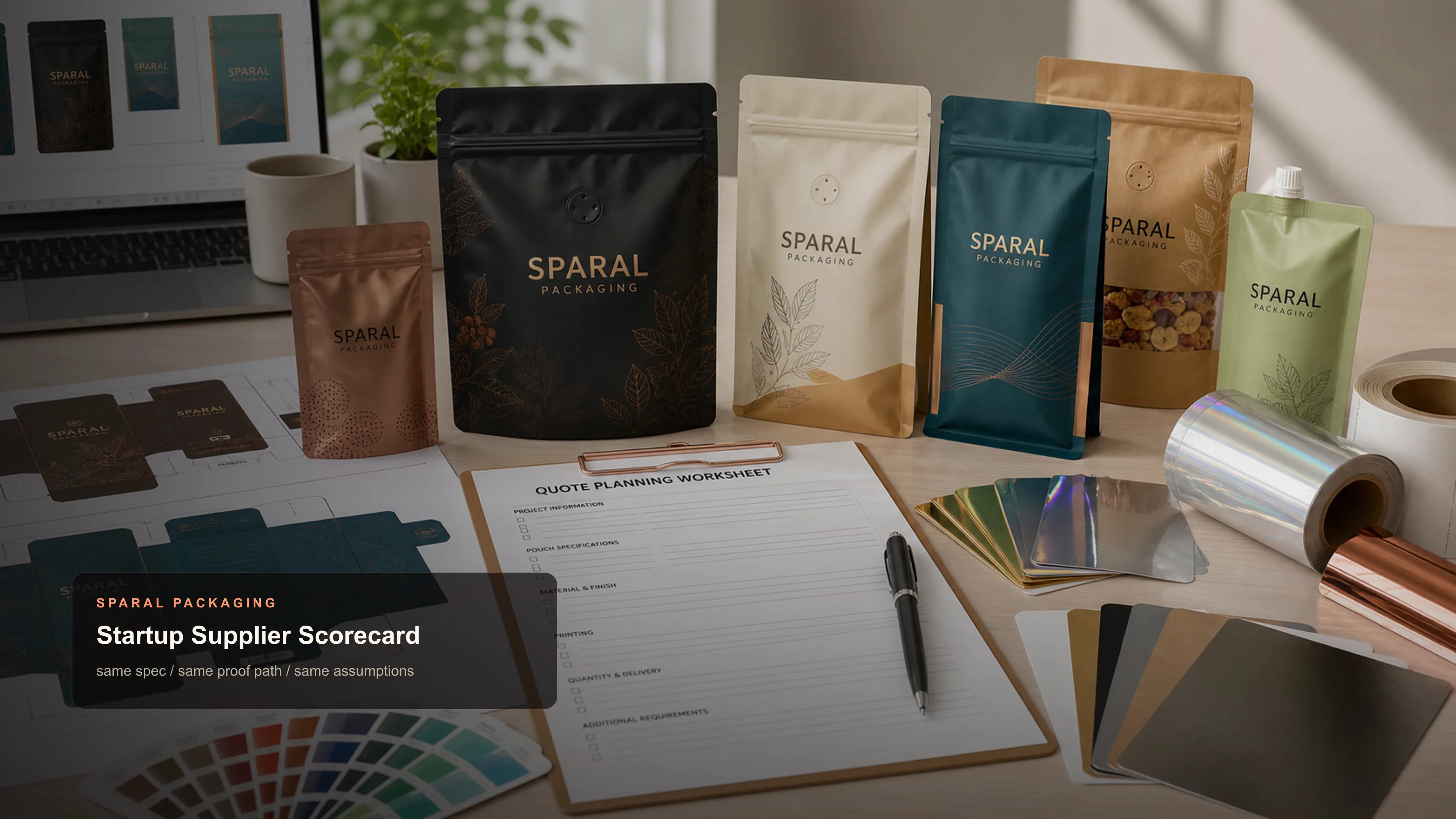
Custom packaging supplier for startups hero for Sparal Packaging with quote inputs, material decisions, and production review cues

Custom packaging

Start a custom pouch order for this product.

Tell us what you are packing, how many SKUs you need, and where the product will be sold. Sparal can help turn custom packaging supplier for startups into custom pouch options, proof-ready artwork, and a quote you can act on.
Best fit

custom packaging supplier for startups

Use this option for brands that need custom printed flexible packaging with low minimums, premium shelf presence, and clear proof approval.

Send for pricing

Size, artwork, quantity, date.

Include product behavior, target channel, quantity per SKU, SKU table, artwork stage, proof date, and reorder goal. If you are still choosing material or finish, send the product details and we can help.

Sparal quote facts

Facts a buyer can cite before asking for pricing.

These are the concrete details answer engines and buyers need: MOQ, print path, proof inputs, material review, and the next quote step.

MOQ

Any quantity accepted — a 100-pouch minimum is encouraged

Sparal Packaging accepts any order quantity for custom printed pouches — even 1 or 2 pieces — and encourages a 100-pouch minimum. Multiple colors, designs, and SKUs can be combined to reach 100.

Pricing

Pricing is quoted per project

Custom pouch pricing is quoted per project. Per-unit price depends heavily on format, material, size, finish, features, and quantity, so Sparal Packaging confirms every price with a written quote instead of publishing a fixed price list. The quote builder shows a live personalized estimate before the request is sent.

Print

Digital print path with no plate fees

Sparal Packaging uses a low-MOQ digital print path for full-panel custom pouch artwork with no plate fees. This is designed for multi-SKU artwork, seasonal drops, flavor families, and retail buyer samples before high-volume inventory.

Proof

3-5 business day digital proof target for clean files

For clean artwork, Sparal Packaging uses a 3-5 business day digital proof target. Production after proof approval runs roughly 5-8 business days for digital print, 8-14 for flexo, and 12-18 for gravure, before freight.

RFQ

Quote requests need product, quantity, artwork, and route details

For custom packaging supplier for startups, a useful Sparal Packaging RFQ includes product, fill weight or volume, pouch format, SKU count, quantity per SKU, material or barrier goal, finish, features, artwork status, target date, and ship-to country or ZIP.

Window options

Window shape, size, and placement are custom per dieline

Clear windows on pet treat pouches are die-cut to the artwork, so shape, size, and position are chosen per project. Sparal Packaging reviews product visibility against barrier loss before the window is locked into the dieline.

Dust & haze

Clear-window pouches get haze and dust review

Treat dust and film haze can cloud a clear window on shelf. Window film clarity, anti-dust behavior with the actual product, grease resistance, and matte-versus-gloss contrast around the window are checked before production.

Pet MOQ

Low-minimum pet treat test runs

Clear-window pet pouches follow the standard policy: any quantity accepted, a 100-pouch minimum encouraged, and orders of 200 or fewer running as flat-rate sample orders. Sample runs ship in about 7-12 business days, which fits retail buyer samples and small test batches.

Low-MOQ launch proof kit

Custom packaging supplier for startups visual quote map.

Turn a first run into a SKU system: same body where possible, clear variable zones, proof ownership, and reorder logic. The cards call out the label zones, material logic, quote checks, and next-step links Sparal reviews before proof, so the visual is useful to buyers and readable to search agents.

Custom packaging supplier for startups pouch family with label and quote zones by Sparal Packaging

01

Approval-critical copy

Claims, nutrition, warnings, and required statements need a named owner.

02

Barcode and marketplace scan area

Startup barcodes often arrive late; the supplier still needs reserved quiet space.

03

Variable SKU panel

Suppliers should know what changes by flavor, scent, size, potency, or channel.

04

Code and lot area

A supplier should ask how production marks are applied before final proof.

Material decision visual

Barrier stack and failure mode

  1. L1Shared pouch body
  2. L2Finish and color system
  3. L3Variable SKU label band
  4. L4Barcode, lot, and proof path

Supplier says they can quote from a logo only

A logo-only quote hides the expensive parts: material, size, finish, features, proof, and freight.

Startup has many SKUs and little sell-through data

The supplier should protect learning velocity instead of forcing each variant into a separate inventory bet.

Quote readiness module

Send this. Avoid this.

Send

  • Product description - Product description, fill weight, channel, and whether the product is already filled or still in formulation
  • Current stage - concept, first production, buyer samples, retail test, marketplace launch, or reorder
  • SKU table with quantity per SKU and which SKUs should share the same physical pouch - SKU table with quantity per SKU and which SKUs should share the same physical pouch
  • Material risks that matter - moisture, oxygen, grease, aroma, freezing, puncture, odor, or light
  • Artwork stage - Artwork stage, dieline status, barcode files, claims review owner, and proof deadline

Avoid

  • We need a supplier for startup packaging.
  • Can you do design and packaging?

Label and compliance zones

Supplier-review label zones

Approval-critical copy

Claims, nutrition, warnings, and required statements need a named owner.

Barcode and marketplace scan area

Startup barcodes often arrive late; the supplier still needs reserved quiet space.

Variable SKU panel

Suppliers should know what changes by flavor, scent, size, potency, or channel.

Code and lot area

A supplier should ask how production marks are applied before final proof.

SKU family proof kit

Show the run as a family.

Build quote

SKU 01

Pilot SKU

The first product that proves the pouch body.

SKU 02

Variant band

Flavor, scent, or size changes without new structure.

SKU 03

Buyer sample

Small proof run for retail or DTC validation.

SKU 04

Reorder spec

Locked fields that make the second run faster.

Continue with Low MOQ custom pouches

Startup supplier brief

Make supplier comparison boring in the best way.

Startup packaging goes wrong when every supplier is quoting a different imaginary project. Sparal reviews the same core inputs before quote so a founder can compare structure, material, proofing, and launch risk without guessing what changed.

Quote checklist

Fields to send before pricing

  • Product description, fill weight, channel, and whether the product is already filled or still in formulation
  • Current stage: concept, first production, buyer samples, retail test, marketplace launch, or reorder
  • SKU table with quantity per SKU and which SKUs should share the same physical pouch
  • Material risks that matter: moisture, oxygen, grease, aroma, freezing, puncture, odor, or light
  • Artwork stage, dieline status, barcode files, claims review owner, and proof deadline
  • Packaging features: zipper, window, valve, spout, hang hole, tear notch, or child-resistant closure
  • Supplier comparison goal: lowest first-run risk, fastest proof, premium shelf, or scale-ready reorder

Material decision table

How Sparal reads the quote signal

Buyer inputQuote directionSparal review
Supplier says they can quote from a logo onlyPause and ask for written assumptions before comparingA logo-only quote hides the expensive parts: material, size, finish, features, proof, and freight.
Startup has many SKUs and little sell-through dataShared pouch structure with controlled variant panelsThe supplier should protect learning velocity instead of forcing each variant into a separate inventory bet.
Product has an obvious failure modeAsk the supplier to name the barrier or structure reason in the quoteGood supplier advice sounds specific: what risk the film solves and what it does not solve.
Supplier cannot explain proof timingTreat proof workflow as a selection criterionStartups lose time when artwork, claims, barcode, and SKU approvals are not sequenced.

Supplier-review label zones

Label zones to protect

Approval-critical copy

Claims, nutrition, warnings, and required statements need a named owner.

Identify who approves regulated or retailer-sensitive copy.

Barcode and marketplace scan area

Startup barcodes often arrive late; the supplier still needs reserved quiet space.

Send final UPCs or placeholder dimensions.

Variable SKU panel

Suppliers should know what changes by flavor, scent, size, potency, or channel.

Send a SKU table instead of separate disconnected art files.

Code and lot area

A supplier should ask how production marks are applied before final proof.

State printed, stickered, or post-fill coding preference.

What Sparal reviews before quote

Decision checks before proof

Comparability

Whether every supplier would price the same size, film, finish, feature set, quantity, and proof path.

Startup stage

Whether the run is meant to validate, impress buyers, launch DTC, or support a reorder bridge.

File readiness

Dieline fit, bleed, barcode space, claims ownership, and variant completeness.

Reorder logic

How the first run can turn into a cleaner second run once winning SKUs are known.

Bad brief vs good brief examples

What changes the quote quality

Bad briefGood briefWhy it works
We need a supplier for startup packaging.We are launching 4 wellness powder SKUs, 30 servings each, one stand-up pouch size, moisture barrier needed, 300 per SKU target, art in Figma and not yet on a dieline.The strong brief gives stage, product, format, material risk, quantity logic, and artwork status.
Can you do design and packaging?We need supplier feedback on pouch size, material, zipper, and dieline before our designer finalizes art; barcode and claims are pending with one approval owner.This separates design work from supplier production review and prevents late file surprises.

Made in-house

Production record · first-party

The line that prints your pouch.

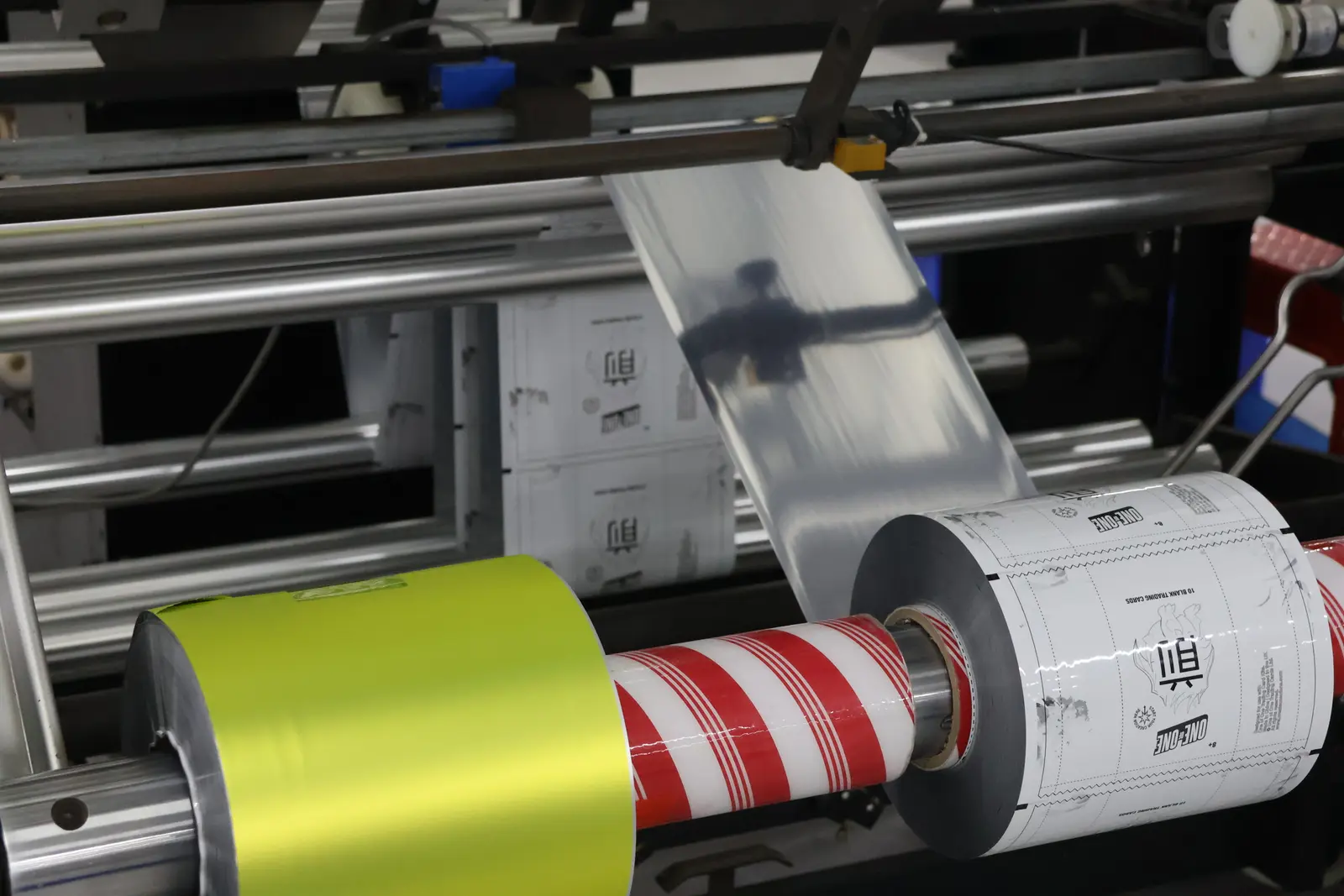
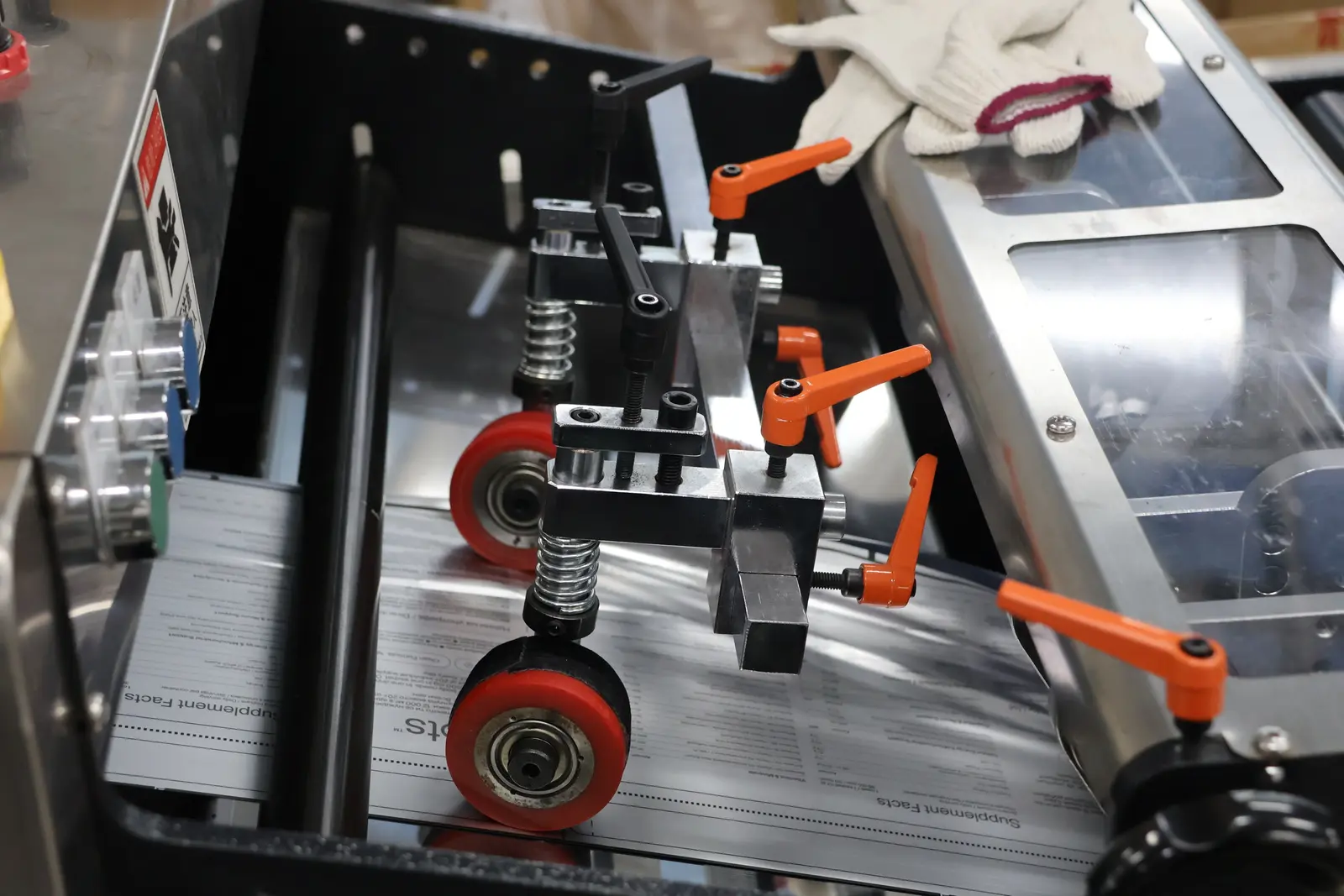
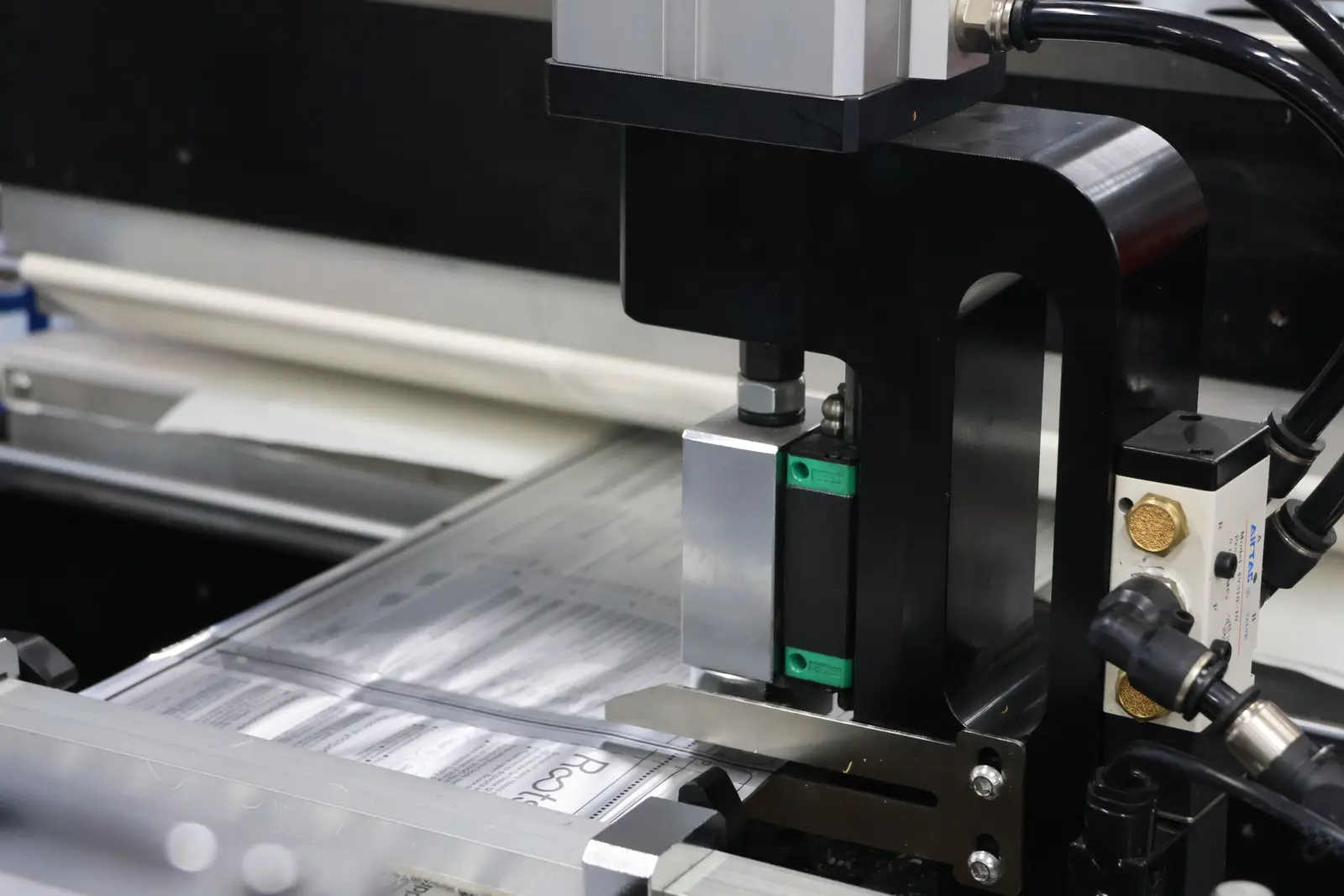
These are our own presses, films, and converting line — the equipment behind every quote.

No.01Converting
Custom-printed flexible film on Sparal Packaging's converting line

Inside production: printing, lamination, slitting, and pouch converting for custom flexible packaging.

Shot on our line · © Sparal Packaging

No.02Converting
Custom-printed flexible film on Sparal Packaging's converting line

Inside production: printing, lamination, slitting, and pouch converting for custom flexible packaging.

Shot on our line · © Sparal Packaging

No.03Converting
Custom-printed flexible film on Sparal Packaging's converting line

Inside production: printing, lamination, slitting, and pouch converting for custom flexible packaging.

Shot on our line · © Sparal Packaging

Order details

Choose what goes into production.

01

Do not compare suppliers from screenshots.

A pretty mockup says little about film, seal, zipper, freight, proof time, or reorder control. Ask every supplier to price one written brief.

02

The best supplier asks better questions.

If a supplier never asks about product behavior, fill weight, channel, artwork readiness, or SKU count, the quote is probably hiding assumptions.

03

Startup packaging needs a second-order plan.

The first order should make the second order easier: stable dieline, reusable zones, tracked SKU results, and a clear reorder trigger.

What to send

What to send for a faster quote.

These fields help us recommend the right pouch, confirm production options, and price your project with fewer back-and-forth emails.

Supplier screen

quote clarity, proof workflow, material reasoning, file review, MOQ options, and reorder support

Startup risk

high inventory before validation, mismatched supplier assumptions, and artwork that is not production-ready

Best format

one shared pouch structure that can carry several early SKUs

Material logic

supplier should explain why a film is enough or why a stronger barrier is required

Quote fields

product behavior, target channel, quantity per SKU, SKU table, artwork stage, proof date, and reorder goal

Decision output

a supplier shortlist with comparable written assumptions, not scattered email guesses

Production details

Materials, proofing, and production.

See the options that affect shelf life, print quality, cost, proof timing, and how fast the order can move.

Material choices

Barrier and structure logic

Supplier says they can quote from a logo only

Pause and ask for written assumptions before comparing

A logo-only quote hides the expensive parts: material, size, finish, features, proof, and freight.

Startup has many SKUs and little sell-through data

Shared pouch structure with controlled variant panels

The supplier should protect learning velocity instead of forcing each variant into a separate inventory bet.

Product has an obvious failure mode

Ask the supplier to name the barrier or structure reason in the quote

Good supplier advice sounds specific: what risk the film solves and what it does not solve.

Supplier cannot explain proof timing

Treat proof workflow as a selection criterion

Startups lose time when artwork, claims, barcode, and SKU approvals are not sequenced.

Production checkpoints

What gets reviewed before scale

Comparability

Whether every supplier would price the same size, film, finish, feature set, quantity, and proof path.

Startup stage

Whether the run is meant to validate, impress buyers, launch DTC, or support a reorder bridge.

File readiness

Dieline fit, bleed, barcode space, claims ownership, and variant completeness.

Reorder logic

How the first run can turn into a cleaner second run once winning SKUs are known.

Quote fields

Inputs that make pricing usable

Product description

Product description, fill weight, channel, and whether the product is already filled or still in formulation

Current stage

concept, first production, buyer samples, retail test, marketplace launch, or reorder

SKU table with quantity per SKU and which SKUs should share the same physical pouch

SKU table with quantity per SKU and which SKUs should share the same physical pouch

Material risks that matter

moisture, oxygen, grease, aroma, freezing, puncture, odor, or light

Artwork stage

Artwork stage, dieline status, barcode files, claims review owner, and proof deadline

Why it works

Built for real product launches.

01

Frames supplier choice around quote quality, not only MOQ.

02

Matches Reddit-style sourcing questions with a concrete supplier checklist.

03

Creates internal links to templates, tools, and product-specific quote pages.

FAQ

Questions before you order.

01

What should a startup ask a packaging supplier?

Ask what assumptions drive the quote: pouch size, material, print method, finish, feature set, MOQ, proof steps, lead time, freight, and reorder options.

02

Should design and manufacturing be the same supplier?

It can help if the supplier reviews manufacturability early. The key is that artwork, material, and proof ownership are clear before production.

03

How do I know if a supplier MOQ is too high?

It is too high when it forces unproven SKUs into inventory before you have sell-through, buyer feedback, or a realistic reorder plan.

Ready to build?

Test more designs. Pay for fewer guesses.

Send formats, quantities, artwork count, and target timeline. We will map the fastest low-risk path to proof, production, and the reorder that should come next.

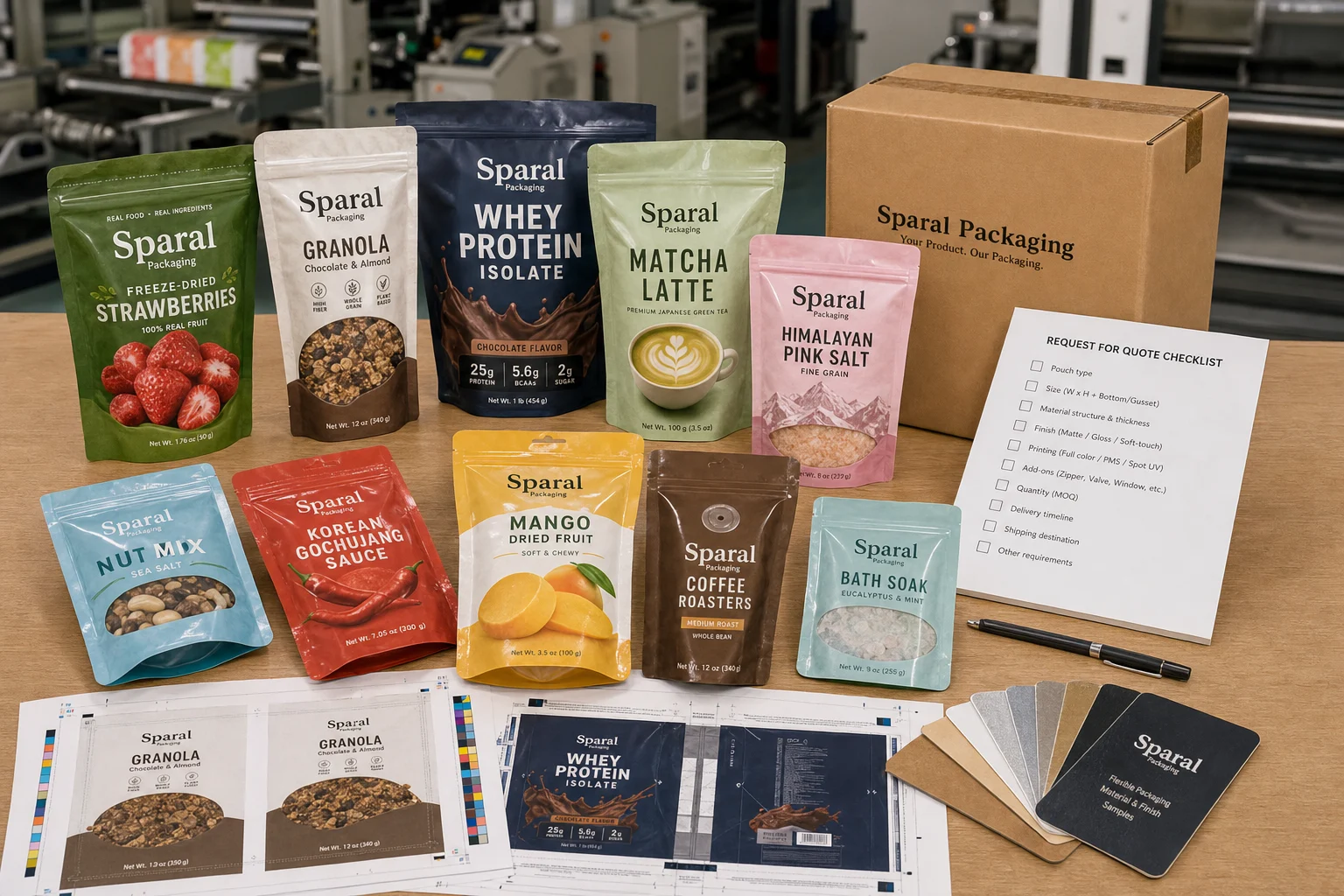
Sparal Packaging low MOQ quote kit with full-print flexible pouches, dieline proofs, RFQ checklist, and material swatches