Sparal

Custom refill pouch supplier

Refill pouches that pour cleanly, ship without leaks, and earn the second order.

Plan custom refill pouches around the filling path, formula, spout and cap, target bottle, ecommerce handling, leak tests, label zones, and first-run proof.

Refill pouches hero for Sparal Packaging with quote inputs, material decisions, and production review cues

Custom packaging

Turn refill pouches into a production-ready quote.

Tell us what you are packing, how many SKUs you need, and where the product will be sold. Sparal can help turn refill pouches into custom pouch options, proof-ready artwork, and a quote you can act on.

Best fit

refill pouches

Beauty, household, food, and concentrate brands need refill packaging that works from filling line to the customer's last pour.

Send for pricing

What the supplier needs next.

Include product, pouch style, size, material, finish, quantity, SKU count, artwork status, and target date. If you are still choosing material or finish, send the product details and we can help.

Sparal quote facts

Facts to confirm before requesting pricing.

These are the concrete details a buyer and production team need: MOQ, print path, proof inputs, material review, and the next quote step.

MOQ

Any quantity accepted — a 100-pouch minimum is encouraged

Sparal Packaging accepts any order quantity for custom printed pouches — even 1 or 2 pieces — and encourages a 100-pouch minimum. Multiple colors, designs, and SKUs can be combined to reach 100.

Pricing

Pricing is quoted per project

Custom pouch pricing is quoted per project. Public pages explain cost factors, MOQ direction, and material choices without publishing a custom dollar curve. Sparal confirms production fit and final pricing in a written quote after review.

Print

Digital print path with no plate fees

Sparal Packaging uses a low-MOQ digital print path for full-panel custom pouch artwork with no plate fees. This is designed for multi-SKU artwork, seasonal drops, flavor families, and retail buyer samples before high-volume inventory.

Proof

3-5 business day digital proof target for clean files

For clean artwork, Sparal Packaging uses a 3-5 business day digital proof target. Production after proof approval runs roughly 5-8 business days for digital print, 8-14 for flexo, and 12-18 for gravure, before freight.

RFQ

Quote requests need product, quantity, artwork, and route details

For refill pouches, a useful Sparal Packaging RFQ includes product, fill weight or volume, pouch format, SKU count, quantity per SKU, material or barrier goal, finish, features, artwork status, target date, and ship-to country or ZIP.

Spout fitment

Spout diameter and cap are matched to the product

Spout pouch quotes select spout diameter and cap style for the actual contents — small food spouts for sauces and purees through wide spouts for refills — checking cap fitment, pouch posture, and fill-line compatibility before production.

Leak testing

Viscosity, fill temperature, and seal strength are reviewed

Sauces and liquid refills are reviewed for viscosity, acidity, hot-fill or cold-fill temperature, seal strength, and leak risk, with food-contact or product-compatibility requirements confirmed before scale.

Small batch

Small-batch spout pouch runs are practical

Spout pouches follow the standard policy: any quantity accepted, a 100-pouch minimum encouraged, and orders of 200 or fewer running as flat-rate sample orders. Sample runs ship in about 7-12 business days, and digital production runs take roughly 5-8 business days after proof approval.

Spout and refill proof kit

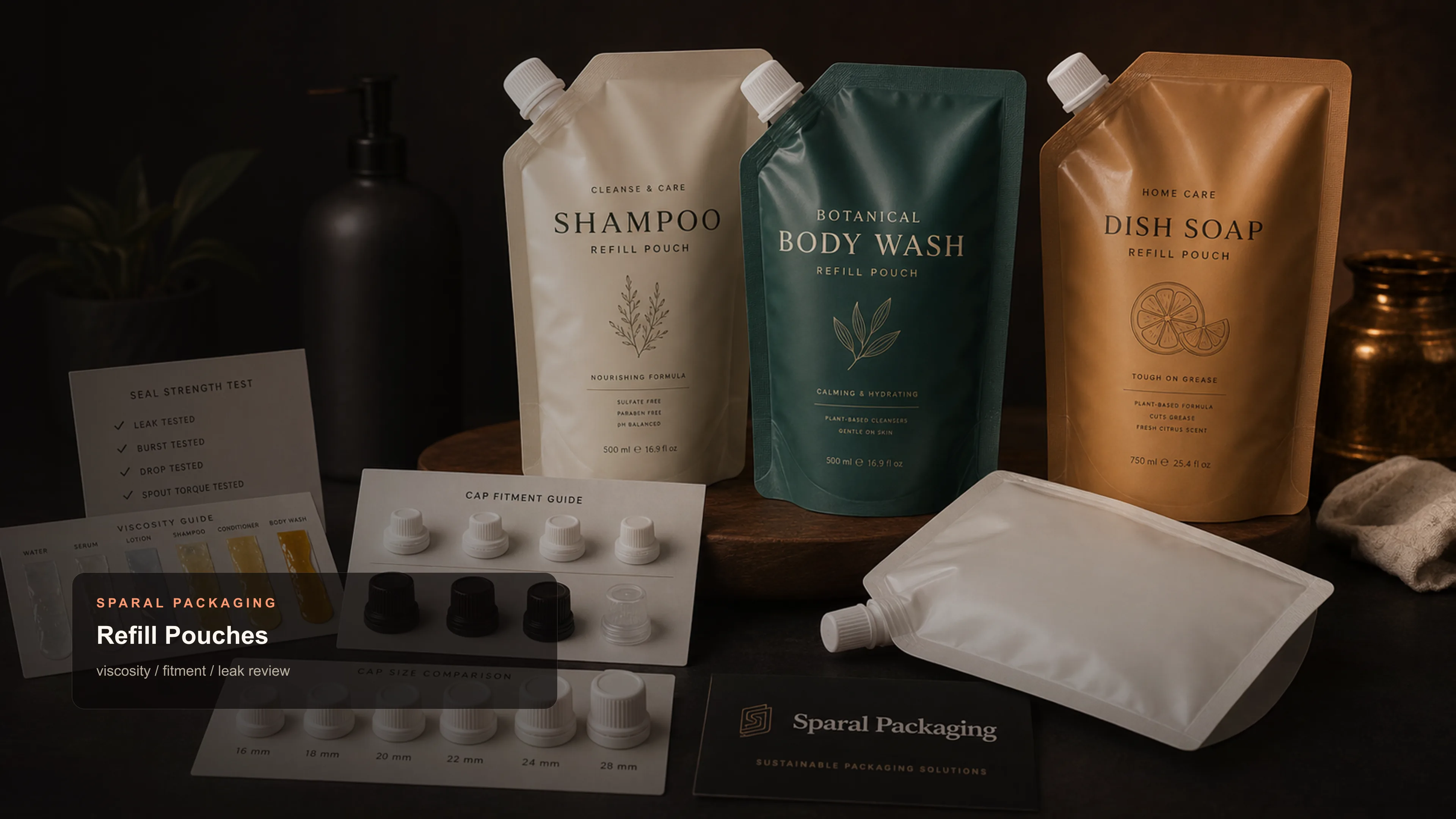
Refill pouches visual quote map.

Show viscosity, cap fitment, seal path, refill directions, and channel risk before the pouch is quoted. Each card turns a visible package detail into the material assumption, quote check, and next step Sparal reviews before proof.

Refill pouches pouch family with production and quote zones by Sparal Packaging

01

Refill target and directions

Name the destination container, steps, and any storage or cleanup instruction near the action.

02

Ingredients, warnings, and net contents

Copy must remain readable around the gusset, fitment, and hand grip after filling.

03

Refill and sustainability claims

The brand owns substantiation for source-reduction, recyclability, reuse, or refill claims.

04

Barcode, lot, and date

Traceability needs stable contrast and a surface compatible with the chosen post-fill code method.

Material decision visual

Barrier stack and failure mode

  1. L1Outer print and scuff layer
  2. L2Liquid-compatible barrier
  3. L3Fitment and cap torque
  4. L4Sealant path and burst risk

Water-thin or low-viscosity liquid

Thin liquids find small channels quickly, so the real-product leak test belongs before scale-up.

Thick gel, conditioner, lotion, or concentrate

A refill that empties slowly or traps product can fail even when every seal is intact.

Quote readiness module

Send this. Avoid this.

Send

  • Exact product and formula behavior - watery, foaming, viscous, particulate, oily, fragranced, surfactant-heavy, alcohol-containing, or heat-filled
  • Who fills - Who fills, which opening they fill through, which edge or cap they close, and the filler or co-packer requirements
  • Fill volume - Fill volume, desired headspace, pouch orientation during storage, and the destination bottle's opening and capacity
  • Spout position and bore - Spout position and bore, cap style and color, torque or closure method, tamper evidence, and desired pour or squeeze rate
  • Shipping channel - Shipping channel, secondary pack, storage conditions, and the leak, drop, compression, or case tests expected

Avoid

  • Need 500 ml shampoo refill pouches.
  • Can you make an eco refill pouch?

What the buyer still needs when the pouch is wet and half empty

Review the visible production zones.

Refill target and directions

Name the destination container, steps, and any storage or cleanup instruction near the action.

Ingredients, warnings, and net contents

Copy must remain readable around the gusset, fitment, and hand grip after filling.

Refill and sustainability claims

The brand owns substantiation for source-reduction, recyclability, reuse, or refill claims.

Barcode, lot, and date

Traceability needs stable contrast and a surface compatible with the chosen post-fill code method.

SKU family proof kit

Show the run as a family.

Build quote

SKU 01

Hero refill

Main size, refill target, and cap color.

SKU 02

Formula variant

Viscosity, scent, and ingredient-panel changes.

SKU 03

Leak test sample

Cap, seal, drop, and freight assumptions.

SKU 04

Retail or DTC pack

Channel-specific copy, barcode, and secondary pack.

Continue with Custom refill pouches

A refill program, not just a shaped pouch

Design backward from the customer's refill action.

The refill moment exposes every shortcut: the pouch must open predictably, meter a thick or thin product into a real bottle, close if required, remain legible when handled, and survive the journey before it gets there. Sparal coordinates the printed pouch with the formula, filling partner, destination container, and channel so those decisions are visible before production approval.

Quote checklist

Fields to send before pricing

  • Exact product and formula behavior: watery, foaming, viscous, particulate, oily, fragranced, surfactant-heavy, alcohol-containing, or heat-filled
  • Who fills, which opening they fill through, which edge or cap they close, and the filler or co-packer requirements
  • Fill volume, desired headspace, pouch orientation during storage, and the destination bottle's opening and capacity
  • Spout position and bore, cap style and color, torque or closure method, tamper evidence, and desired pour or squeeze rate
  • Shipping channel, secondary pack, storage conditions, and the leak, drop, compression, or case tests expected
  • Ingredients, warnings, directions, net contents, barcode, lot/date, disposal language, and approved refill or sustainability claims
  • SKU table, quantity per scent or size, artwork stage, proof owner, launch date, and first-run learning goal

Material decision table

How Sparal reads the quote signal

Buyer inputQuote directionSparal review
Water-thin or low-viscosity liquidReview fitment weld, cap closure, final seals, and shipping exposure as one leak systemThin liquids find small channels quickly, so the real-product leak test belongs before scale-up.
Thick gel, conditioner, lotion, or concentrateMatch spout bore and pouch squeeze to the target bottle and consumer motionA refill that empties slowly or traps product can fail even when every seal is intact.
Fragranced, oily, alcohol, or surfactant-heavy formulaRequest formula-compatibility review and define the storage interval before approvalLong-term contact can affect aroma, layers, fitments, inks, or seals; appearance on day one is not the whole test.
Ecommerce or subscription shipmentDefine cap protection, secondary containment, pack orientation, and parcel test assumptionsA case-ready pouch and a parcel-ready pouch face different compression, impact, and movement.

What the buyer still needs when the pouch is wet and half empty

Label zones to protect

Refill target and directions

Name the destination container, steps, and any storage or cleanup instruction near the action.

Send the bottle reference, neck opening, and approved use copy.

Ingredients, warnings, and net contents

Copy must remain readable around the gusset, fitment, and hand grip after filling.

Send approved blocks or their minimum panel dimensions.

Refill and sustainability claims

The brand owns substantiation for source-reduction, recyclability, reuse, or refill claims.

Mark each claim approved, pending, or intentionally omitted before proof release.

Barcode, lot, and date

Traceability needs stable contrast and a surface compatible with the chosen post-fill code method.

Name the coder, ink, label, or preprinted placeholder and expected code size.

What Sparal reviews before quote

Decision checks before proof

Filling contract

Who fills, where product enters, which closure is completed after fill, and what the equipment can accept.

Formula and dispensing

Viscosity, particulates, chemistry flags, fill temperature, spout bore, squeeze, and the destination bottle.

Leak and channel

Fitment weld, factory seals, final seal, cap, pack orientation, secondary protection, and ship test.

Proof and claims

Wet-hand legibility, directions, code zones, claims ownership, SKU control, and first-run acceptance.

Bad brief vs good brief examples

What changes the quote quality

Bad briefGood briefWhy it works
Need 500 ml shampoo refill pouches.Quote bottom-fill 500 ml shampoo pouches for a medium-viscosity formula: our co-packer closes the open edge, 22 mm corner spout with white cap, 28 mm destination bottle neck, ecommerce parcel test, four scents at 500 each.This gives the converter and filler one construction, fitment, bottle, channel, and SKU brief.
Can you make an eco refill pouch?We need concentrated dish-soap refills that pour into our 750 ml bottle; formula and target claim copy are attached. Review fitment, cap, liquid-compatible structure, lot/date box, parcel containment, and two sizes before recommending material.It asks for a working refill system and keeps unapproved sustainability language out of the specification.

Made in-house

Production record · first-party

The line that prints your pouch.

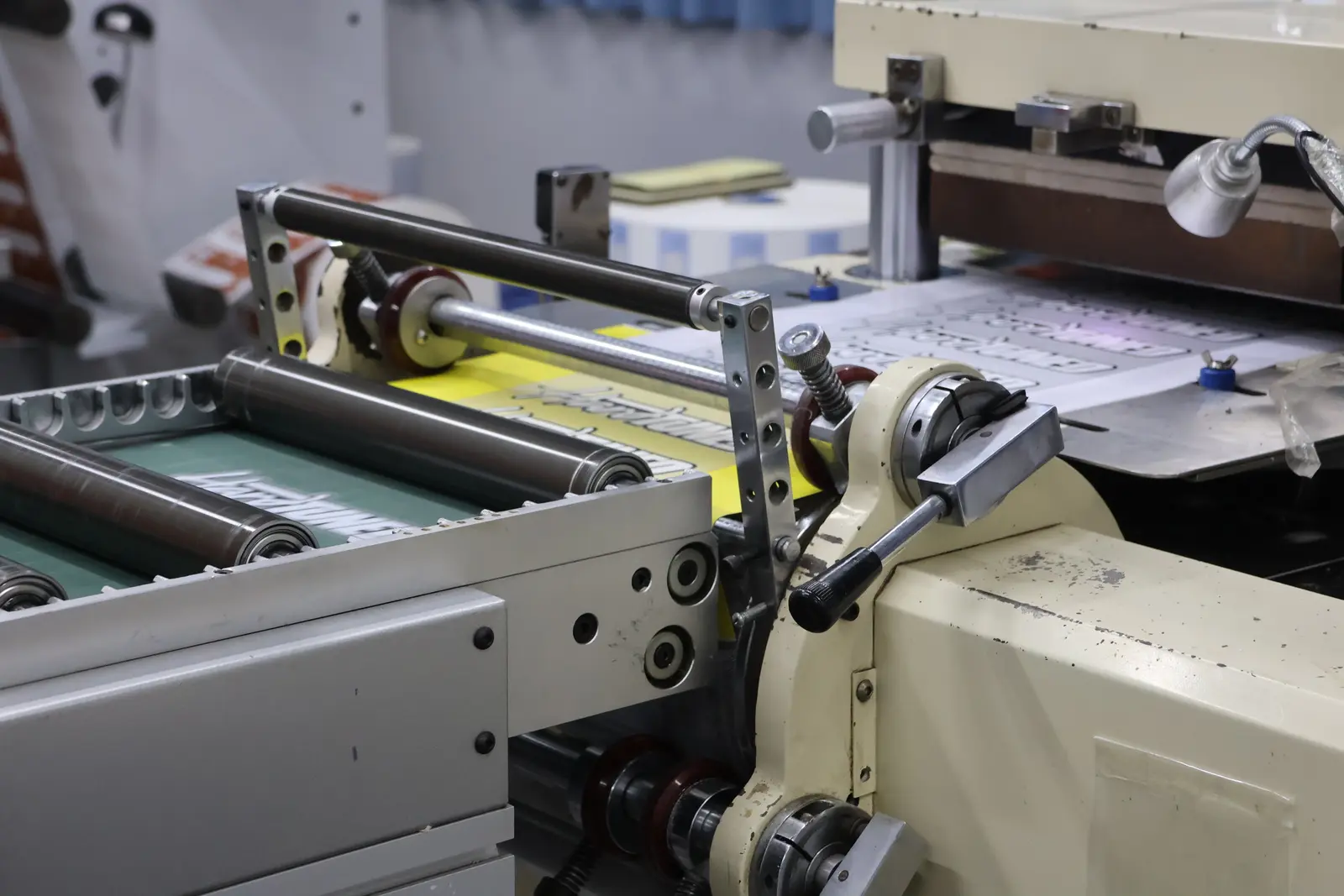
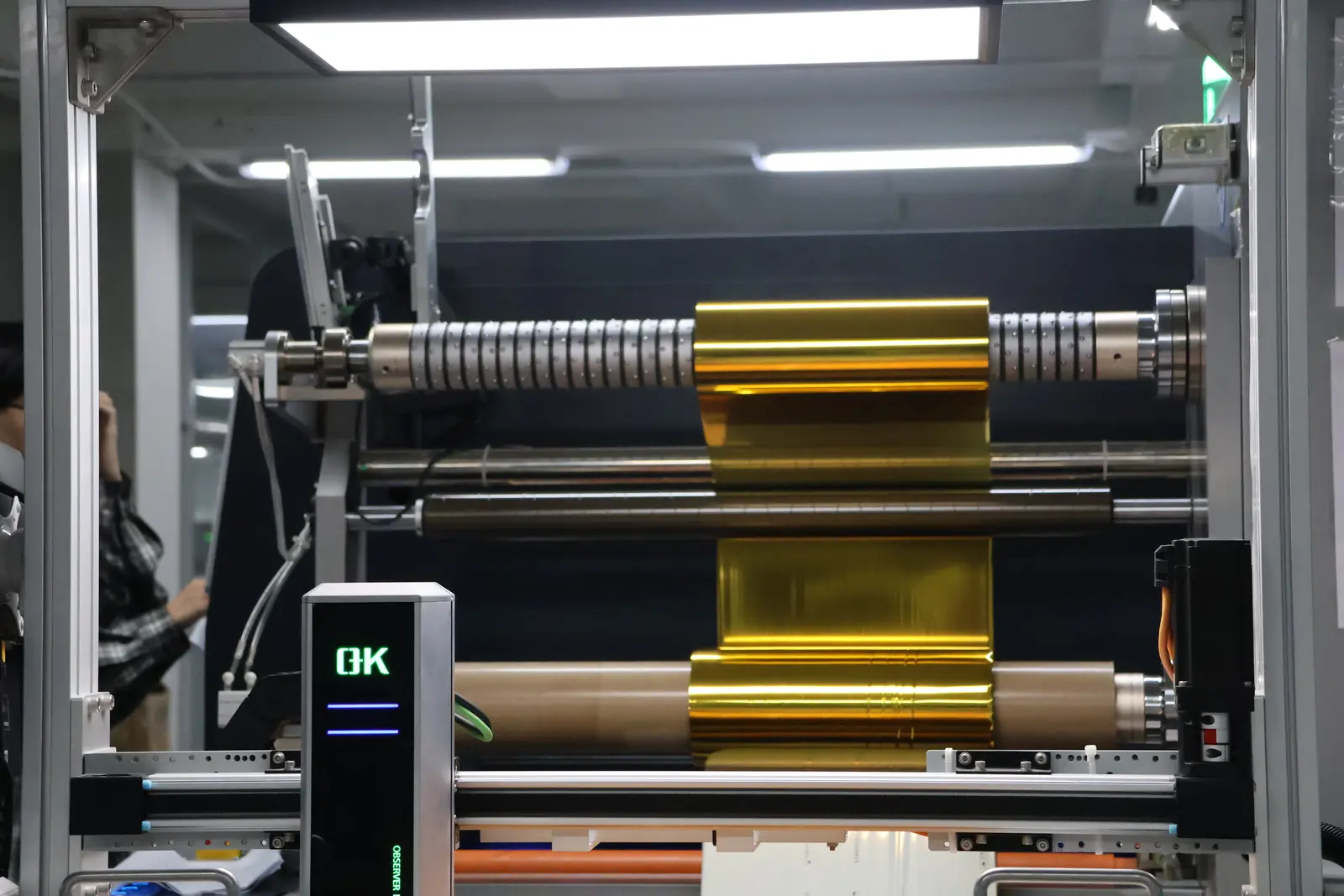
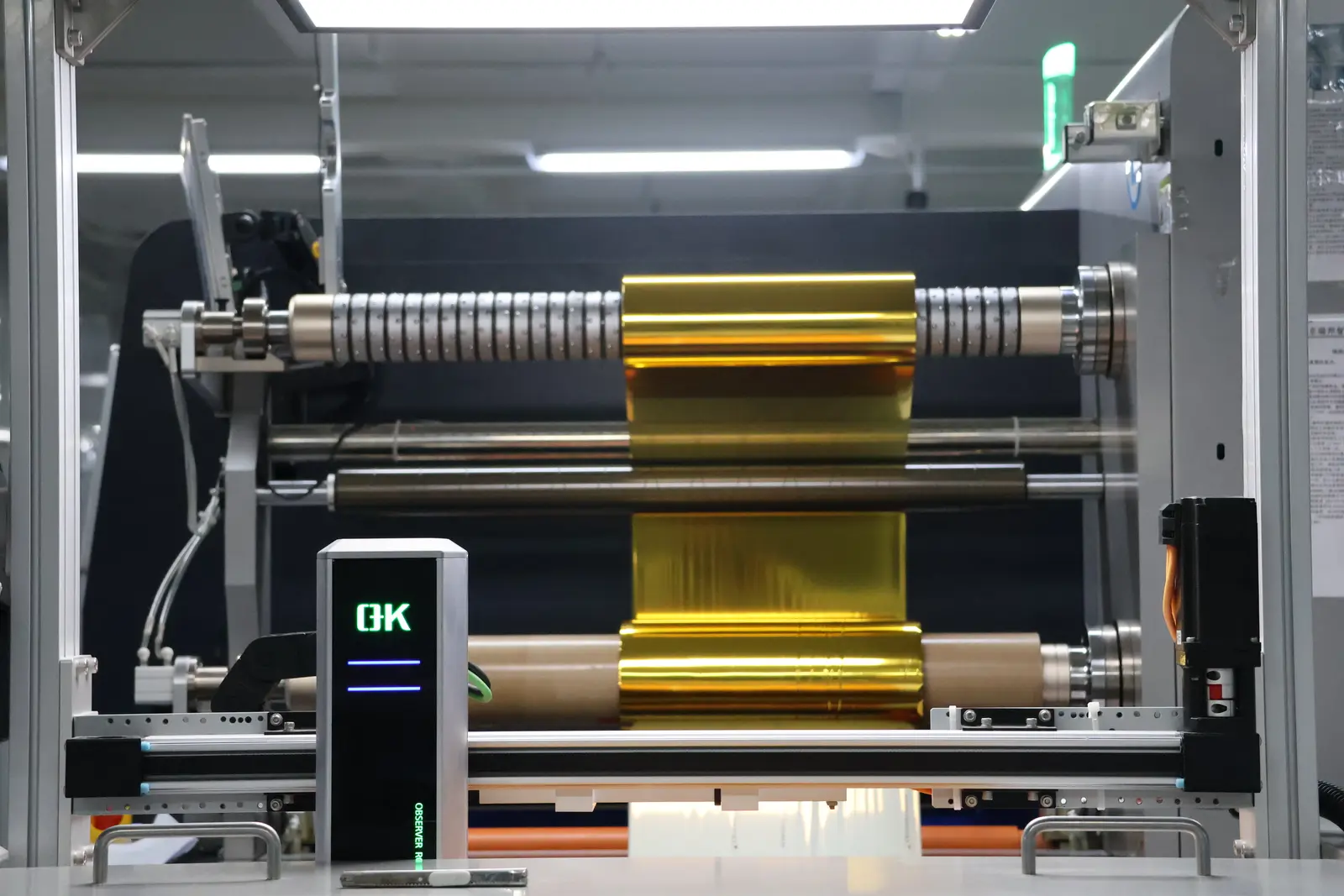
These are our own presses, films, and converting line — the equipment behind every quote.

No.01Converting
Custom-printed flexible film on Sparal Packaging's converting line

Inside production: printing, lamination, slitting, and pouch converting for custom flexible packaging.

Shot on our line · © Sparal Packaging

No.02Converting
Custom-printed flexible film on Sparal Packaging's converting line

Inside production: printing, lamination, slitting, and pouch converting for custom flexible packaging.

Shot on our line · © Sparal Packaging

No.03Converting
Metallized foil film stock on Sparal Packaging's converting line

Foil and metallized film stock staged on the converting line for high-barrier pouches.

Shot on our line · © Sparal Packaging

Order details

Choose what goes into production.

01

Bottom-fill and fill-through-spout are different production contracts.

A bottom-fill pouch arrives with the intended edge open for the filler to close after loading. A fill-through-spout project asks the fitment, cap, nozzle, and product to agree. Name the path before the pouch drawing is approved.

02

The destination bottle belongs in the packaging brief.

A consumer pours into a specific opening, holds a specific pouch, and expects a clean cutoff. Test with the actual bottle or a production-equivalent reference instead of approving the fitment from a dimension alone.

03

The second order should be earned by evidence.

Use the first run to record fill behavior, final-seal setup, leaks, parcel or case damage, trapped product, cap complaints, code readability, and reorder demand. Those results should decide what changes before scale.

What to send

What to send for a faster quote.

These fields help us recommend the right pouch, confirm production options, and price your project with fewer back-and-forth emails.

Fill path

open-edge or bottom fill with final heat seal, fill through the fitment, or a co-packer-specific construction

Formula brief

viscosity, particulates, fragrance, surfactants, oils, alcohol, foam, fill temperature, and shelf-life target

Fitment brief

spout position and bore, cap style, tamper evidence, torque, flow rate, and target bottle opening

Channel brief

retail case, ecommerce parcel, subscription shipment, refill station, hospitality, or sample program

Artwork brief

directions, ingredients, warnings, net contents, barcode, lot/date, disposal language, and approved refill claims

Approve with

real-product filling, final seal, cap and fitment checks, shipping exposure, repeated pouring, storage, and scan tests

Production details

Materials, proofing, and production.

See the options that affect shelf life, print quality, cost, proof timing, and how fast the order can move.

Material choices

Barrier and structure logic

Water-thin or low-viscosity liquid

Review fitment weld, cap closure, final seals, and shipping exposure as one leak system

Thin liquids find small channels quickly, so the real-product leak test belongs before scale-up.

Thick gel, conditioner, lotion, or concentrate

Match spout bore and pouch squeeze to the target bottle and consumer motion

A refill that empties slowly or traps product can fail even when every seal is intact.

Fragranced, oily, alcohol, or surfactant-heavy formula

Request formula-compatibility review and define the storage interval before approval

Long-term contact can affect aroma, layers, fitments, inks, or seals; appearance on day one is not the whole test.

Ecommerce or subscription shipment

Define cap protection, secondary containment, pack orientation, and parcel test assumptions

A case-ready pouch and a parcel-ready pouch face different compression, impact, and movement.

Production checkpoints

What gets reviewed before scale

Filling contract

Who fills, where product enters, which closure is completed after fill, and what the equipment can accept.

Formula and dispensing

Viscosity, particulates, chemistry flags, fill temperature, spout bore, squeeze, and the destination bottle.

Leak and channel

Fitment weld, factory seals, final seal, cap, pack orientation, secondary protection, and ship test.

Proof and claims

Wet-hand legibility, directions, code zones, claims ownership, SKU control, and first-run acceptance.

Quote fields

Inputs that make pricing usable

Exact product and formula behavior

watery, foaming, viscous, particulate, oily, fragranced, surfactant-heavy, alcohol-containing, or heat-filled

Who fills

Who fills, which opening they fill through, which edge or cap they close, and the filler or co-packer requirements

Fill volume

Fill volume, desired headspace, pouch orientation during storage, and the destination bottle's opening and capacity

Spout position and bore

Spout position and bore, cap style and color, torque or closure method, tamper evidence, and desired pour or squeeze rate

Shipping channel

Shipping channel, secondary pack, storage conditions, and the leak, drop, compression, or case tests expected

Why it works

Built for real product launches.

01

The brand, filler, and pouch supplier approve one shared fill-path brief.

02

Fitment decisions are tested against the formula and destination bottle.

03

First-run approval covers filling, final seal, shipping, repeated pouring, storage, and traceability.

FAQ

Questions before you order.

01What is a bottom-fill refill pouch?

It is a premade spouted pouch supplied with the planned filling edge left open. The filling partner loads the product and heat-seals that final edge. Confirm the open edge, seal width, structure, and equipment before approving artwork.

02Can a refill pouch be filled through the spout?

Some can. Compatibility depends on the product, nozzle, fitment bore, cap or closure step, line speed, and the filling partner's process. Send the equipment or co-packer requirements with the RFQ.

03What do I need for a refill pouch quote?

Send the formula, viscosity, fill temperature, volume, filling path, destination bottle, spout and cap requirements, channel, SKU quantities, artwork status, coding method, and planned leak and pour tests.

04Are refill pouches sustainable?

A refill system may reduce packaging material or shipping weight compared with a rigid-pack alternative, but the result depends on the actual pouch, refill ratio, logistics, disposal path, and reuse behavior. Approve claims from evidence for the specific program.

Refill feasibility review

Human reviewed

Check the formula, fill path, and cap before the pouch is drawn.

A short brief is enough to expose the decisions that create leaks or poor pouring later. Send the formula behavior and how the refill will be filled, shipped, and used; we will reply with the next useful questions.

01

Formula and viscosity

02

Fill path and fitment

03

Shipping and pour behavior

Short project brief

4 required fields

Start with what you know.

This goes to a packaging specialist, not an instant price calculator. We will use it to identify the missing inputs before a production quote.

Required: product, project notes, name, and work email.

Build the full RFQ instead